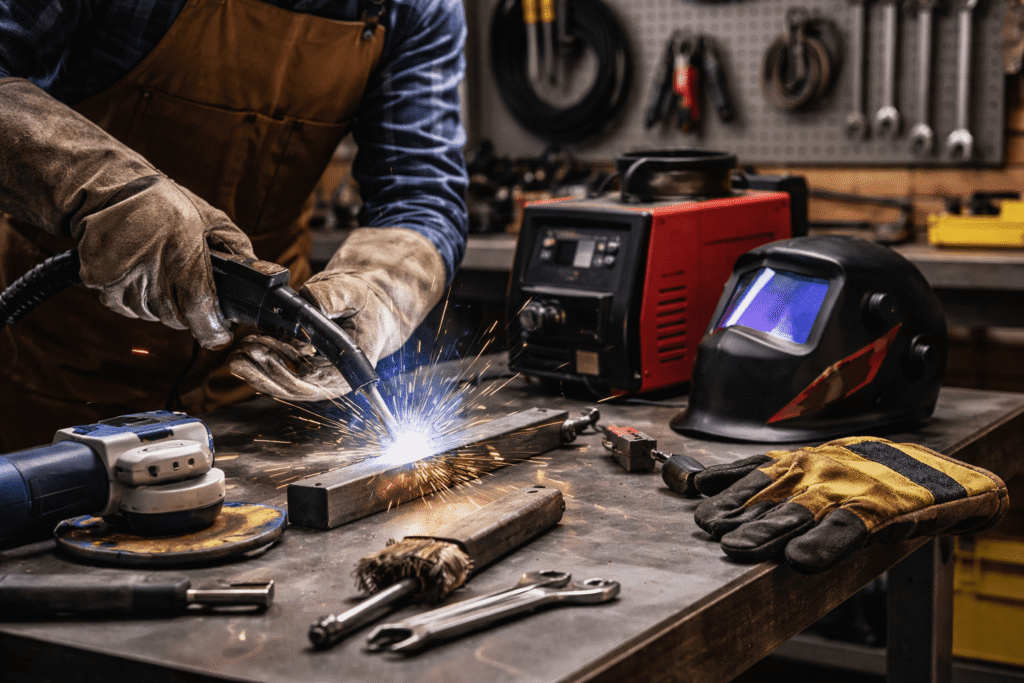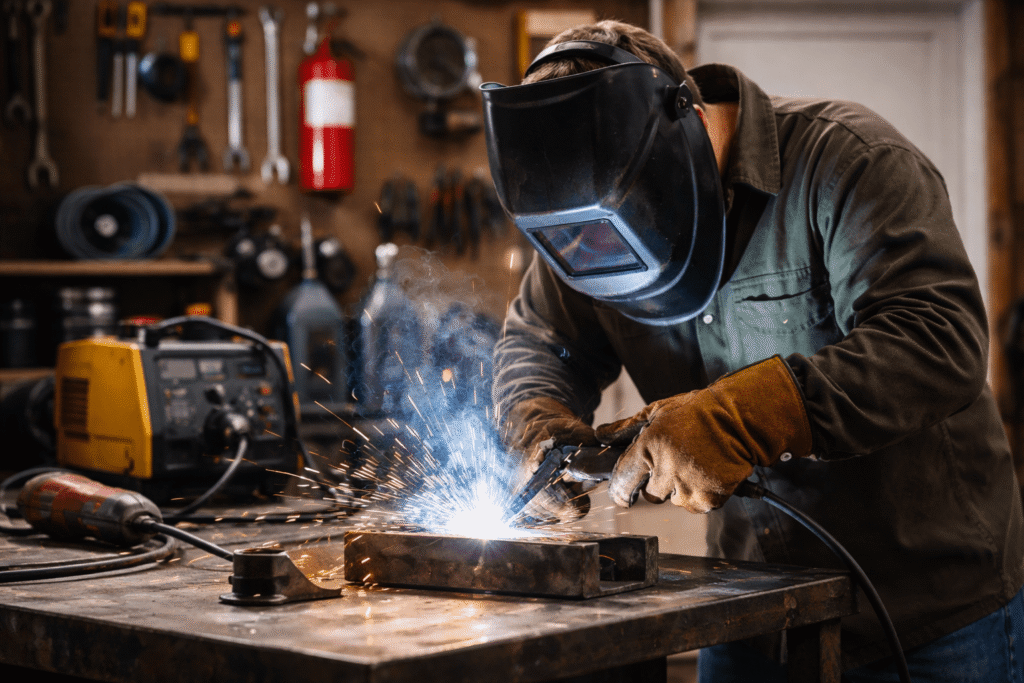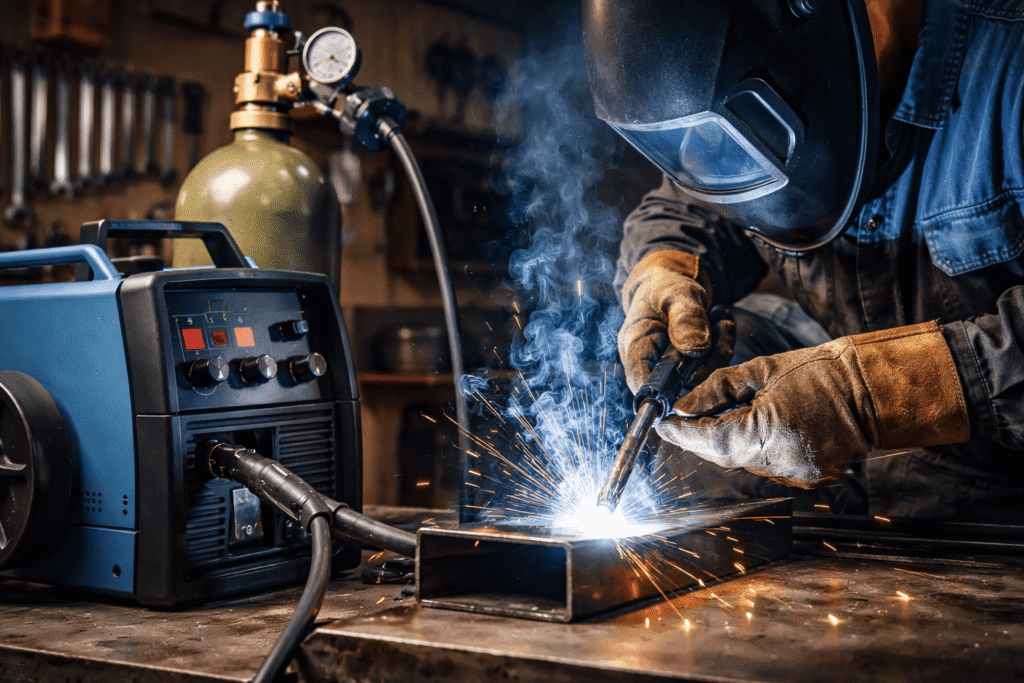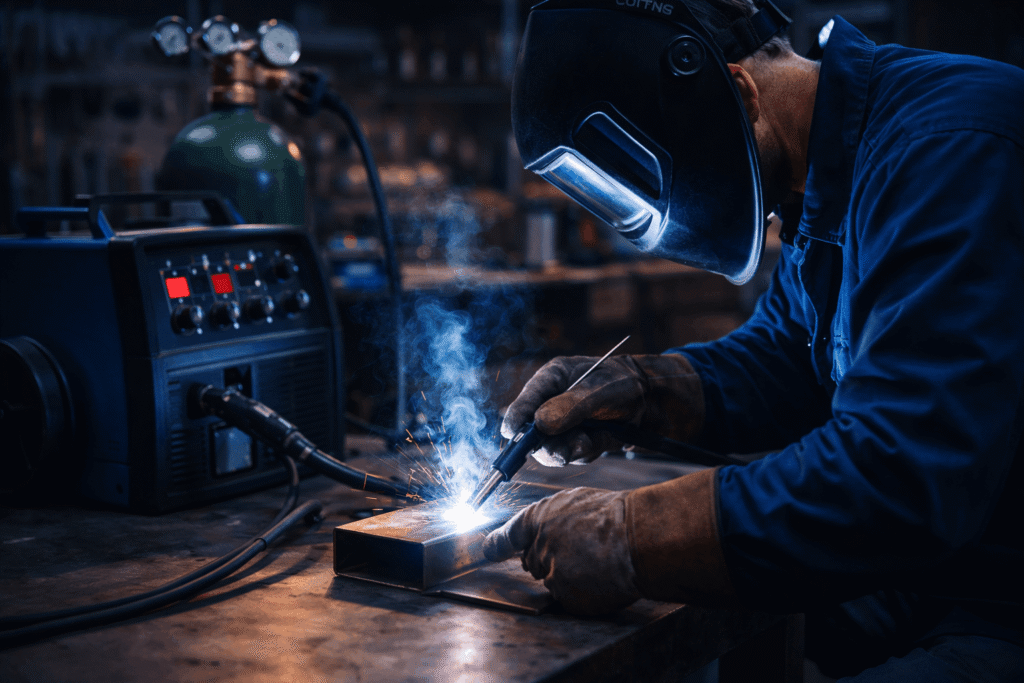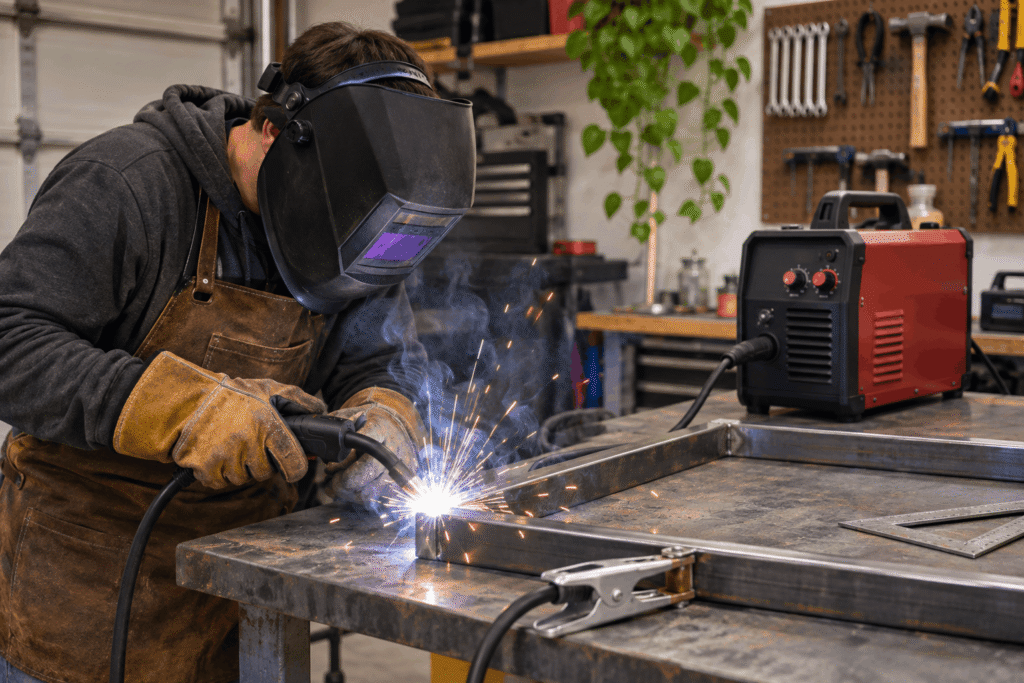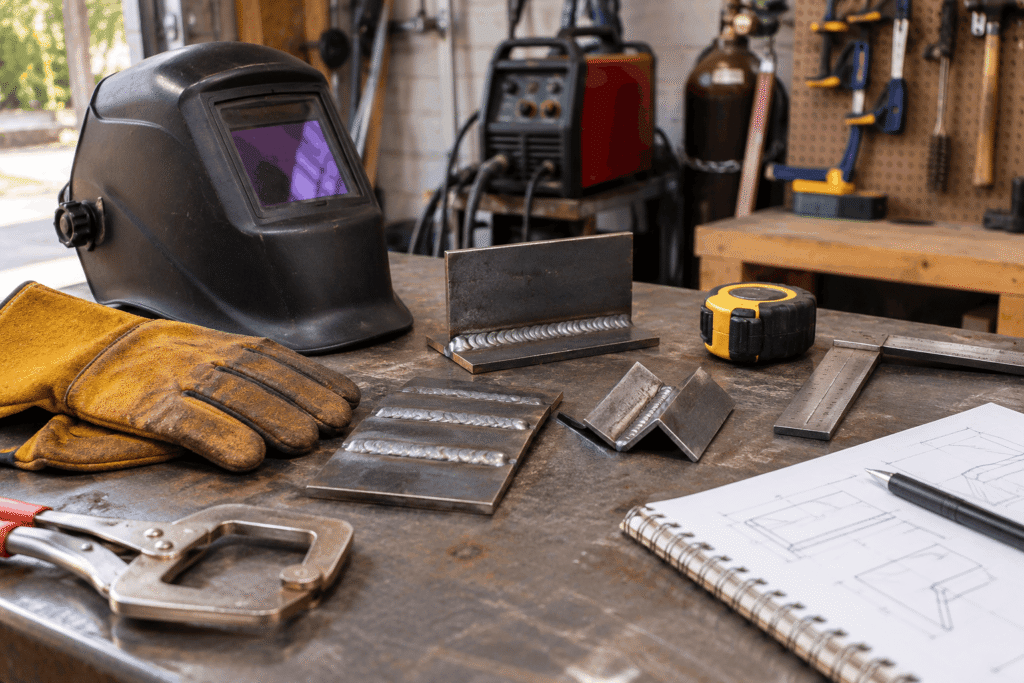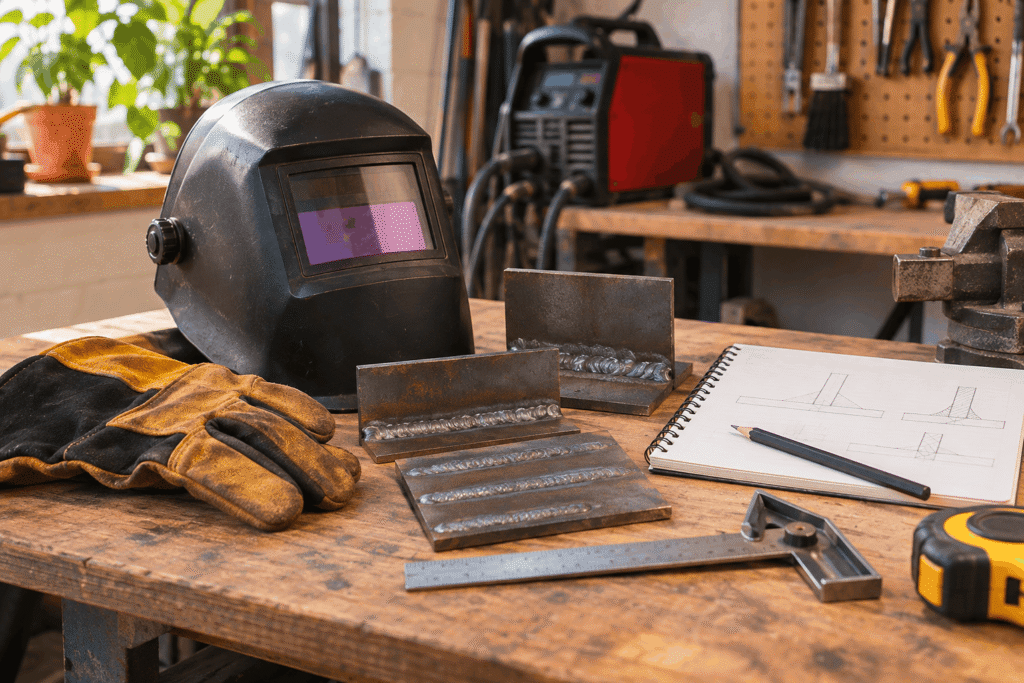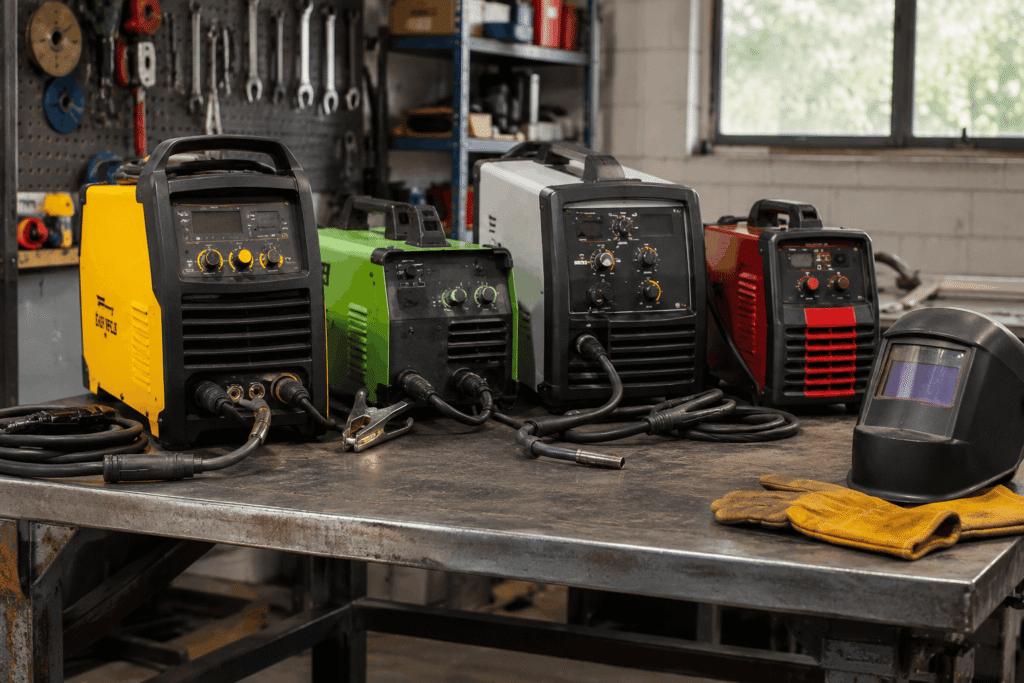
Stick welding is an arc welding process that uses electricity and a flux-coated metal rod to join two pieces of metal. Also called shielded metal arc welding (SMAW), it’s one of the simplest welding methods in terms of equipment. You don’t need a separate shielding gas tank, and you can weld outdoors without worrying as much about the wind.
It’s a practical choice for repairing steel gates, farm equipment, and metal frames. However, stick welding takes some practice, especially when you’re learning to control the arc and avoid sticking the electrode to the metal.
Here’s how it works, what equipment you’ll need, and where it makes the most sense.
Key Takeaways:
- Stick welding uses an electric arc and flux-coated electrode to join metals.
- It works well for outdoor repairs, steel fabrication, and thicker metals.
- You don’t need a shielding gas tank, but slag removal is necessary.
- Stick welding is beginner-friendly, though controlling the arc takes practice.
How Does Stick Welding Work?
Stick welding works by creating an electric arc between a consumable welding electrode and the metal you’re joining. The arc produces enough heat to melt the electrode’s metal core and the surrounding base metal, forming a weld pool.
As the electrode melts, its flux coating releases shielding gases that help protect the molten metal from atmospheric contamination. The flux also forms a layer of slag over the weld, which you remove after it cools.
The process involves four main parts:
- Power source: Supplies the electrical current needed to create the arc.
- Electrode: A flux-coated metal rod that melts and supplies filler metal.
- Weld pool: The molten metal that joins the workpieces together.
- Slag: A protective layer that forms over the weld and needs to be chipped away.
Unlike MIG welding, stick welding doesn’t continuously feed wire through a gun. You hold the electrode manually and gradually move it along the joint as it melts.
The manual metal arc welding guide from TWI explains the process in more technical detail.
What Equipment Do You Need for Stick Welding?
One reason stick welding appeals to home workshop owners is its relatively simple setup. You don’t need a wire feeder or external shielding gas cylinder.
Here’s the basic equipment:
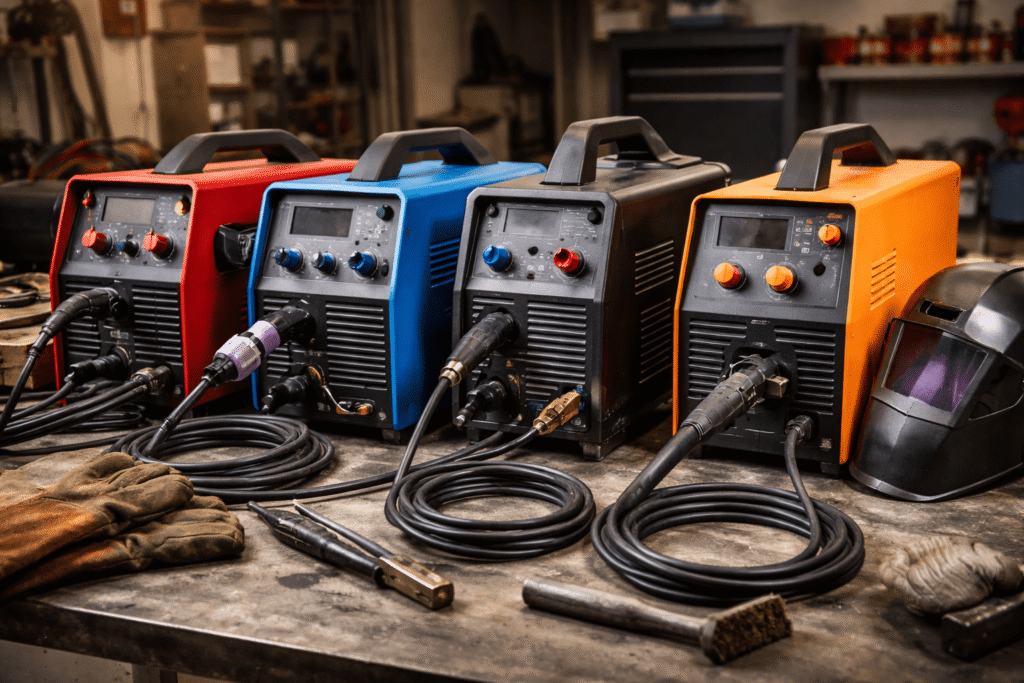
- Stick welder: A constant-current welding machine that supports your chosen electrodes and amperage range.
- Electrode holder: Holds the welding rod and delivers current to it.
- Work clamp and welding cables: Complete the welding circuit.
- Welding electrodes: Flux-coated rods selected for the metal and project.
- Welding helmet and protective clothing: Protect your eyes and skin from UV radiation, sparks, and heat.
- Chipping hammer and wire brush: Remove slag and clean the weld.
- Ventilation or fume extraction: Helps control exposure to harmful welding fumes.
You’ll also need to consider your electrical supply.
A 120V stick welder may work for smaller projects using suitable electrodes, but output can be limited by the machine and available circuit. A 240V machine generally provides more flexibility for higher-amperage work.
Before buying a welder, check its rated input current, required circuit, output range, and duty cycle. Don’t assume a machine will run comfortably just because its plug fits your garage outlet.
What Are the Different Types of Stick Welding Rods?
Stick welding rods come in different classifications, and choosing the right one makes a noticeable difference.
The numbers describe characteristics such as tensile strength, welding position, coating, and current compatibility.
Here are four common electrodes:
[table]
For a beginner practicing on clean mild steel, E6013 can be a manageable starting point. E6011 is useful for certain repair jobs where some surface contamination remains, though it doesn’t eliminate the need for cleaning.
E7018 is another popular option, particularly when a job calls for low-hydrogen electrodes. However, these rods have specific storage and handling requirements, and not every small stick welder runs them equally well.
One thing worth checking: Electrode diameter matters just as much as classification. A 3/32-inch rod generally needs less current than a 1/8-inch rod of the same type.
Follow the electrode manufacturer’s recommended current range rather than relying on one amperage setting for every rod.
How to Stick Weld: Basic Steps for Beginners
Stick welding looks straightforward, but keeping the arc consistent takes coordination. Start with clean mild-steel scrap rather than an important repair.
Here’s the basic process:
- Prepare the metal. Remove paint, oil, heavy rust, and other contamination. Secure the workpieces on a stable, fire-safe surface.
- Set up the welder. Connect the electrode holder and work clamp according to your machine’s instructions. Select the correct polarity.
- Choose your electrode and amperage. Match the rod to the metal thickness and follow the manufacturer’s settings.
- Strike the arc. Touch the electrode against the metal using a tapping or scratching motion, then establish the correct arc length.
- Maintain a steady weld. Move along the joint at a controlled speed, keeping the electrode at the appropriate angle.
- Clean and inspect. After the weld has cooled sufficiently, remove the slag and examine the bead for visible defects.
Arc length is one of the first things beginners struggle with. Hold the rod too close, and it can stick. Move too far away, and the arc becomes unstable, creating excessive spatter and poor weld quality.
Getting a consistent weld comes down to five things: current, arc length, electrode angle, manipulation, and travel speed. You don’t need to master everything at once, but getting these basics right makes a noticeable difference.
For practice, start with flat beads on scrap steel. Move on to joining pieces only after you can maintain a reasonably consistent arc. Never use an untested practice weld for a load-bearing or safety-critical repair.
What Is Stick Welding Used For?
Stick welding works particularly well for outdoor steel repairs and fabrication projects where portability matters.
Common applications include:
- Farm equipment: Repairing suitable steel components on agricultural machinery.
- Fences and gates: Joining steel bars, brackets, and frames.
- Construction: Welding structural steel using qualified procedures.
- Pipelines: Making field welds with appropriate electrodes and techniques.
- Home workshops: Building metal stands, supports, and general fabrication projects.
It can also weld certain stainless steels, cast irons, and other metals when you use the correct electrodes and procedures.
However, not every material is easy to stick weld. Thin sheet metal is challenging because the concentrated heat can burn through it. Aluminum stick welding is possible with specialized electrodes, but MIG or TIG is generally more practical for many aluminum projects.
And while some stick electrodes tolerate surface rust or mill scale better than gas-shielded MIG welding, that doesn’t mean you should skip surface preparation. Clean, properly prepared joints remain the better starting point.
Advantages and Disadvantages of Stick Welding
Stick welding has several advantages, especially for people working outside or repairing heavier steel.
Advantages
- Works outdoors: Its flux coating provides shielding without an external gas cylinder, making it less sensitive to wind than gas-shielded MIG welding.
- Simple equipment: No separate wire feeder or shielding gas system is required.
- Portable setup: Compact inverter stick welders are convenient for work away from a dedicated shop.
- Versatile electrodes: Different rods support various metals, welding positions, and applications.
- Good for repairs: Certain electrodes perform well on steel that isn’t perfectly clean.
Disadvantages
- Steeper learning curve: Maintaining arc length and controlling the weld pool takes practice.
- More cleanup: You need to remove slag between passes and after welding.
- Frequent interruptions: Electrodes burn down and require replacement.
- Difficult on thin metal: Burn-through and distortion can be a problem.
- Fume exposure: Stick welding produces fumes that require proper controls.
There’s also a productivity tradeoff. A stick welding machine may cost less to set up, but replacing electrodes and removing slag takes time.
For occasional garage repairs, that’s not necessarily a dealbreaker. For someone welding long seams every day, the extra labor can become significant.
Stick Welding vs. MIG Welding: What’s the Difference?
The biggest difference is how the two processes deliver filler metal and protect the weld.
[table]
For an occasional steel gate repair outside, I’d lean toward stick welding, assuming the material and repair are suitable.
For building furniture frames, automotive sheet-metal work, or completing numerous indoor welds, MIG could be the more convenient choice.
Self-shielded flux-core welding is worth considering as well. It uses continuously fed flux-cored wire without an external shielding gas cylinder, making it another option for outdoor projects.
Is Stick Welding Safe?
Stick welding can be performed safely with proper equipment, training, and work practices. But the risks are serious.
The main hazards include electric shock, burns, ultraviolet radiation, fire, and inhaling welding fumes.
Fume exposure deserves particular attention. A 2014 study published in Annals of Occupational Hygiene measured approximately 13 mg of fumes per gram of electrode consumed for the stick welding process tested. Certain low-emission MIG processes produced around 1–1.5 mg/g under the study’s conditions.
Those figures don’t represent every electrode or welding setup, but they show why controlling fumes matters.
The Occupational Safety and Health Administration (OSHA) also identifies UV exposure, metal fumes, burns, and electrical shock as major welding hazards.
Before welding:
- Wear a properly rated welding helmet, gloves, and flame-resistant clothing.
- Use suitable ventilation and local fume extraction. Extra controls may be necessary for coated metals or confined spaces.
- Remove flammable materials and keep appropriate fire protection nearby.
- Inspect cables, connections, and equipment before starting.
- Avoid welding painted, galvanized, or unknown-coated metal without identifying and controlling the hazards.
- Never weld a closed container or a container that has held flammable substances without professional assessment and preparation.
A garage door left open does not automatically provide adequate fume control. Keeping your breathing zone away from the plume and using properly designed extraction are important.
Is Stick Welding Good for Beginners?
Yes, stick welding is a reasonable choice for beginners, particularly those interested in outdoor repairs and basic steel fabrication.
Its equipment requirements are straightforward, and you can practice with a relatively simple machine. However, learning to strike an arc, maintain the correct distance, and control travel speed takes patience.
For a first project, I’d recommend practicing flat beads on clean, reasonably thick mild-steel scrap with a suitable rod and manufacturer-approved settings.
If your main goal is welding thin sheet metal or making neat indoor fabrication projects, MIG may be easier to learn.
The best starting process comes down to the projects you want to tackle, not just the price of the welder.
Read more: Best welders for beginners
Final Thoughts
Stick welding remains a useful option for outdoor repairs, steel fabrication, and home workshop projects. The equipment is relatively simple, and you don’t need a shielding gas cylinder.
Its biggest drawbacks are the learning curve, electrode changes, and slag cleanup. Still, if you’re working on steel gates, farm equipment, or heavier DIY projects, it’s a method worth learning.
Start with clean scrap metal, choose the right electrode, check your electrical supply, and focus on controlling the arc before tackling more demanding welds.
Frequently Asked Questions
Is stick welding stronger than MIG welding?
Both methods can produce strong, reliable welds. Strength depends on the electrode or filler metal, base material, joint preparation, welding procedure, and operator skill. Neither method is automatically stronger.
Can you stick weld without gas?
Yes. Stick welding doesn’t require a separate shielding gas cylinder. The flux coating on the electrode produces shielding gases and protective slag during welding.
Can you stick weld aluminum?
Yes, using specialized aluminum stick electrodes and compatible equipment. However, controlling the weld can be challenging. MIG and TIG are better suited to many aluminum fabrication jobs.
What metals can you stick weld?
Stick welding can join carbon steel, stainless steel, cast iron, and certain other metals using appropriate electrodes and procedures. Material thickness, weldability, and the required joint strength all matter.
What is the easiest stick welding rod for beginners?
E6013 is a good option for practicing on clean mild steel because of its relatively smooth arc characteristics. E6011 and E7018 are also useful, but their behavior and requirements differ. Always check electrode compatibility with your welder.
Can you use a stick welder on thin metal?
Yes, but it becomes increasingly difficult as the metal gets thinner. Low current, small electrodes, and careful technique can help. For very thin sheet metal, MIG or TIG may provide better control.
Mark Reynolds is the founder and senior editor of ToolCruiser, with over fifteen years of hands on experience working in real home garage workshops. His background includes home repairs, woodworking, garage builds, and small scale metal fabrication. Mark oversees all core content and product testing, focusing on real world performance, safety, power requirements, and long term value for homeowners using standard tools and setups.