
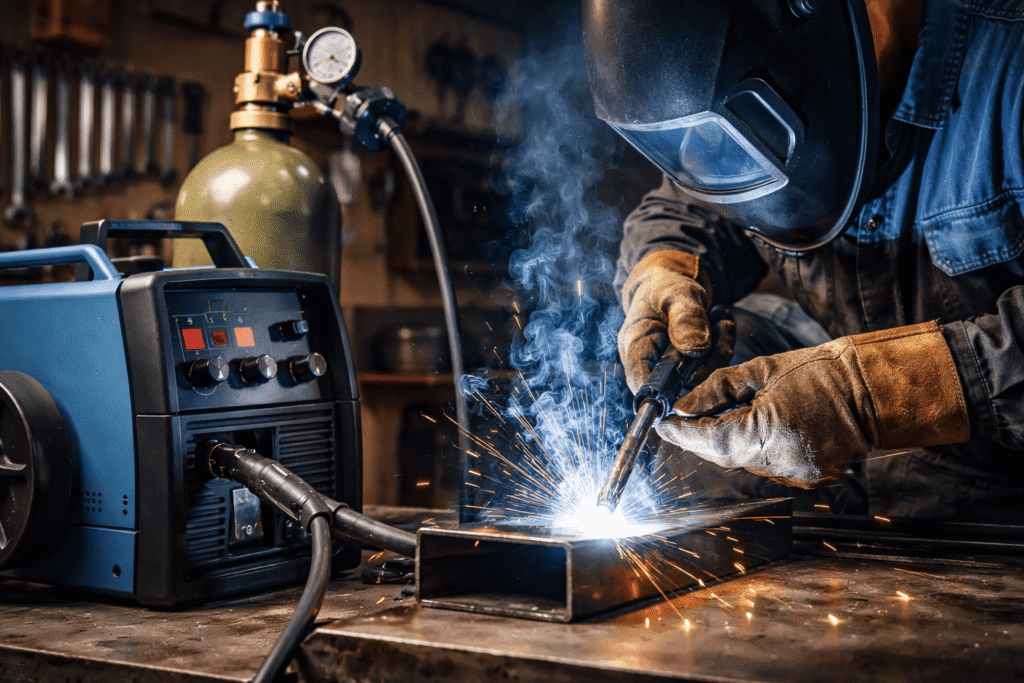
A flux welder, also called a flux-core welder, uses a continuously fed wire filled with flux to join metal pieces together. The flux helps protect the molten weld from contamination. With self-shielded flux-core welding, you don’t need a separate shielding gas tank, making it a practical choice for outdoor repairs and home garage projects.
But there’s a tradeoff. Flux-core welding produces slag, more cleanup, and can be tricky on thin metal. Here’s how it works, where it performs best, and how it compares with MIG welding.
Key Takeaways:
- A flux welder uses flux-filled wire and an electric arc to join metal.
- Self-shielded flux-core welding works without a separate shielding gas cylinder.
- It’s a good option for outdoor steel repairs, farm equipment, and DIY fabrication.
- Flux-core welding produces slag and fumes, and it’s not ideal for every thin-metal project.
What Is a Flux Welder?
A flux welder is a welding machine that uses flux-cored arc welding (FCAW). Instead of feeding solid metal wire into the weld, it uses a hollow wire electrode filled with flux compounds.
When the electric arc melts the wire, these compounds help protect the molten metal from atmospheric contamination. Some flux also forms a protective layer of slag over the weld as it cools.
You’ll see two main types of flux-core welding:
- Self-shielded flux-core welding (FCAW-S): The wire provides its own shielding, so no separate gas cylinder is required.
- Gas-shielded flux-core welding (FCAW-G): Uses flux-filled wire along with external shielding gas, mainly for heavier fabrication and industrial work.
For most home garage projects, people are referring to self-shielded flux-core welding when they talk about a flux welder.
How Does a Flux Welder Work?
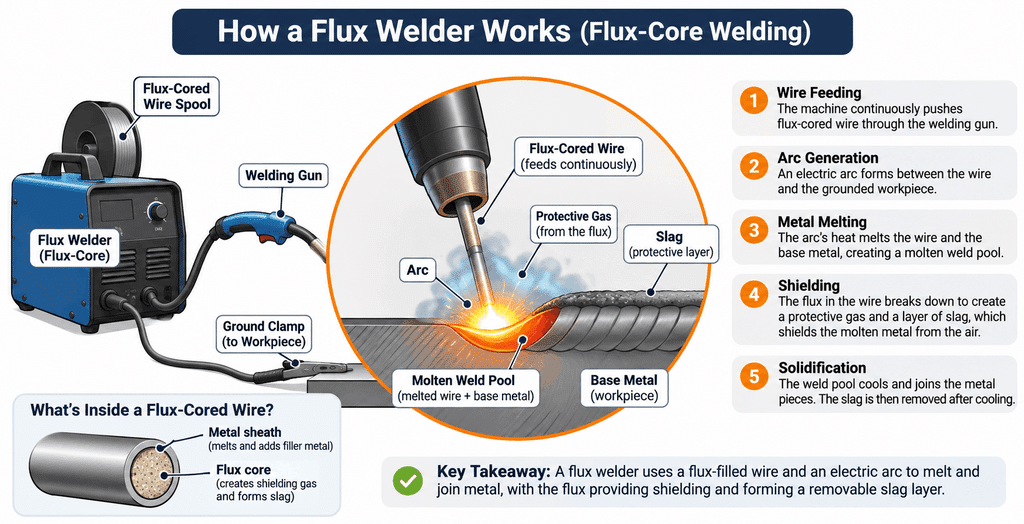
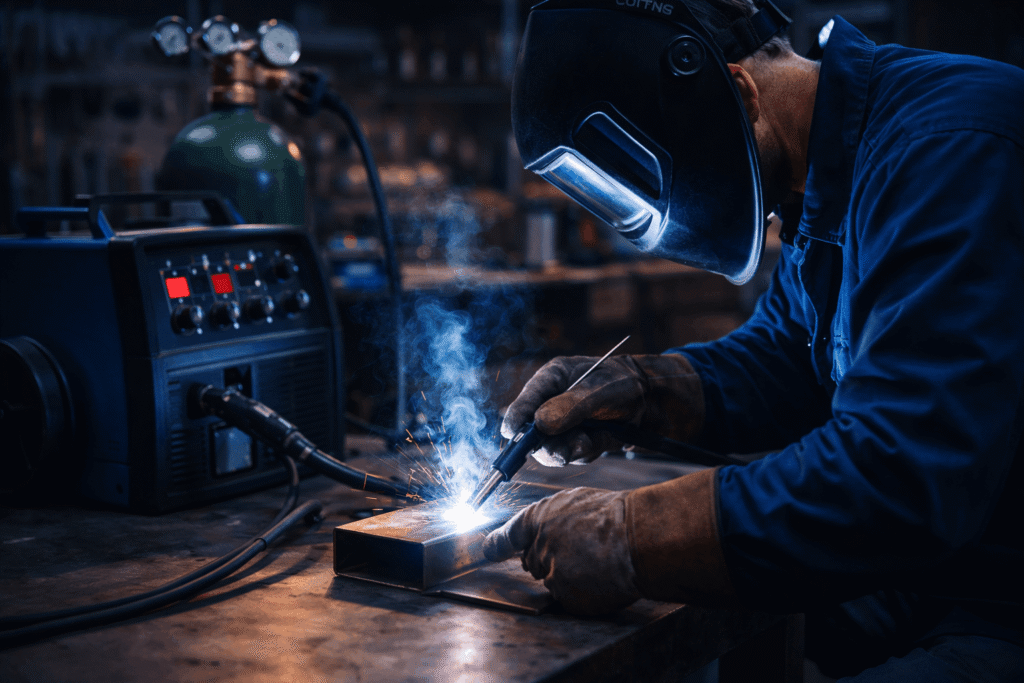
A flux welder works by creating an electric arc between a continuously fed wire electrode and the metal you’re welding. The heat melts both the wire and the adjoining base metal, forming a weld.
Here’s what happens:
- Wire feeding: The machine pushes flux-cored wire through the welding gun.
- Arc generation: An electric arc forms when the energized wire approaches the grounded workpiece.
- Metal melting: Heat from the arc melts the wire and adjoining metal, creating a molten weld pool.
- Shielding: The flux reacts with the heat to create protective shielding and slag.
- Solidification: The weld pool cools and joins the metal pieces. Once the slag cools, you remove it with suitable tools.
One important detail: the slag isn’t part of the finished metal joint. It’s a protective layer that needs to come off, especially before adding another weld pass.
According to Miller Electric’s flux-cored welding guide, this process is well suited to outdoor conditions because self-shielded flux-core wire doesn’t depend on an external shielding gas that wind can blow away.
What Is a Flux Welder Used For?
Flux-core welding works well for steel fabrication and repairs where portability and outdoor performance matter more than a perfectly clean weld appearance.
Common applications include:
- Metal gates and fences: Repairing steel hinges, brackets, and noncritical structural connections.
- Farm equipment: Repairing suitable steel components on agricultural equipment.
- DIY fabrication: Making workshop stands, shelving frames, and simple metal projects.
- Outdoor repairs: Working on steel projects where wind makes gas-shielded MIG welding difficult.
- Industrial fabrication: Using suitable flux-core equipment for thicker steel and demanding production work.
For example, imagine repairing a steel garden gate in your driveway. A self-shielded flux welder lets you work without bringing a gas cylinder outside.
Now consider replacing a thin, rusted car body panel. That’s a different job. A gas-shielded MIG welder may give you better control over the weld puddle and reduce the risk of burning through the sheet metal.
Keep in mind: Safety-critical repairs, such as trailer hitches, vehicle frames, and load-bearing connections, require qualified procedures and appropriate expertise. A weld that looks solid isn’t proof that it can handle the intended load.
What Metals Can You Weld With a Flux Welder?
Mild steel is the most common material for small gasless flux-core welders. Certain flux-cored wires also support stainless steel and other specialized applications, but the machine and wire must be compatible.
Metal thickness is just as important.
Take the Forney Easy Weld 141 FC-i as an example. This 120V flux-core machine offers up to 140 amps and advertises a single-pass mild-steel thickness range from 24 gauge to 1/4 inch.
That doesn’t mean every 120V welder can produce an acceptable weld on 1/4-inch steel. Wire selection, available electrical power, joint design, penetration, and operator skill all matter.
For thin sheet metal, controlling heat becomes especially important. Too much heat can leave holes or distort the workpiece.
As for aluminum, common gasless flux-core machines aren’t suitable for aluminum welding. A properly equipped MIG or TIG welder is a better option.
Advantages and Disadvantages of Flux-Core Welding
Flux-core welding has some clear advantages, but it’s worth understanding its limitations before buying a machine.
Advantages
- Good outdoor performance: Self-shielded wire works better in windy conditions than conventional gas-shielded MIG.
- Portable setup: No external gas cylinder means less equipment to move around.
- Simple operation: Continuous wire feeding eliminates the need to replace individual welding rods.
- Useful for thicker steel: With suitable equipment and wire, flux-core welding can provide strong penetration and efficient metal deposition.
- Some tolerance for surface contamination: Flux-core welding can handle light rust or mill scale better than solid-wire MIG in certain applications.
Disadvantages
- More cleanup: Slag and spatter need removal after welding.
- Higher fume exposure concerns: Flux-core welding can produce substantial fumes and requires effective exposure controls.
- Less suitable for thin metal: Thin sheet metal can be challenging for beginners.
- Consumable costs: Flux-cored wire may cost more than comparable solid MIG wire.
- Not ideal for every material: Basic gasless flux-core machines aren’t a practical choice for aluminum projects.
Also, being more tolerant of dirty steel doesn’t mean you should skip surface preparation. Removing rust, oil, paint, and other contamination helps produce more consistent welds and reduces certain fume hazards.
Flux-Core vs. MIG vs. Stick Welding
Flux-core, MIG, and stick welding all use an electric arc to join metal. The main differences involve electrode type, shielding, and how the operator works.
| Feature | Flux-Core (Self-Shielded) | MIG | Stick |
|---|---|---|---|
| Electrode | Flux-filled wire | Solid wire | Coated rod |
| External gas needed | No | Yes | No |
| Outdoor performance | Good | Sensitive to wind | Good |
| Slag removal | Yes | No | Yes |
| Thin metal welding | More challenging | Better suited | More challenging |
| Wire feeding | Automatic | Automatic | Manual rod |
| Best suited for | Outdoor steel repairs | Clean indoor fabrication | Outdoor and heavy-duty repairs |
For a home workshop, I’d look at the projects before choosing a welding process.
If you’re building steel brackets, repairing gates, or working outside, flux-core welding makes sense. If your projects involve thin sheet metal and you want less cleanup, MIG is worth considering.
Stick welding remains useful for outdoor repairs, particularly when portability and access to awkward joints matter.
One more thing: a MIG welder doesn’t automatically support flux-core welding. You need a machine compatible with the wire, polarity, drive system, and required output settings.
How to Use a Flux Welder for the First Time
Learning the basics is straightforward, but making consistent, sound welds takes practice.
Here’s a sensible starting process:
- Prepare your workspace. Remove flammable materials, establish appropriate ventilation and fire precautions, and keep bystanders away.
- Wear protective gear. Use a properly rated welding helmet, gloves, flame-resistant clothing, and appropriate footwear.
- Check your electrical supply. Make sure the outlet, circuit, and any approved extension cord meet the welder’s requirements.
- Load the correct wire. Check the machine’s supported wire diameter and the electrode manufacturer’s recommendations.
- Set the polarity. Many common self-shielded flux-core wires require DC electrode negative (DCEN), but always follow the specific wire instructions.
- Adjust the machine. Start with the manufacturer’s recommended voltage and wire-feed settings for your material.
- Practice on scrap steel. Use clean material of similar thickness before moving to an important project.
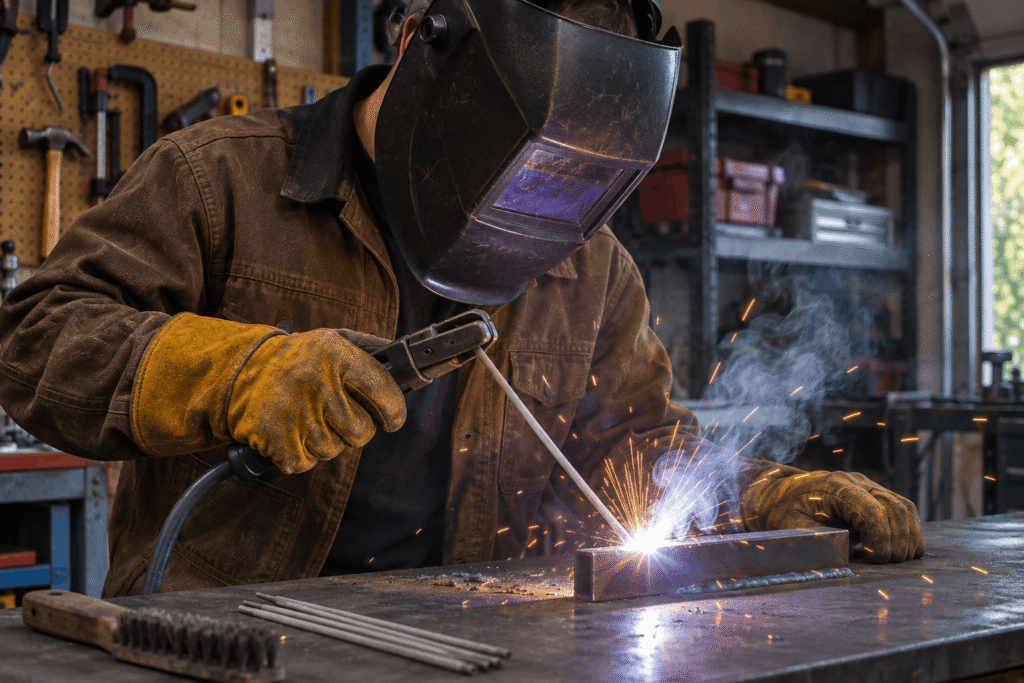
For most self-shielded flux-core wires, use the drag technique. Instead of pushing the welding gun toward the unwelded joint, pull it along the weld line, keeping the arc ahead of the finished bead.
A travel angle of around 5–15 degrees is a good starting point. Keep your movement steady and watch the molten weld pool rather than the sparks. If you move too quickly, you risk poor fusion. Move too slowly, and you can build up excessive weld metal or burn through thinner steel. Always check the wire manufacturer’s recommendations for stickout, polarity, and technique.
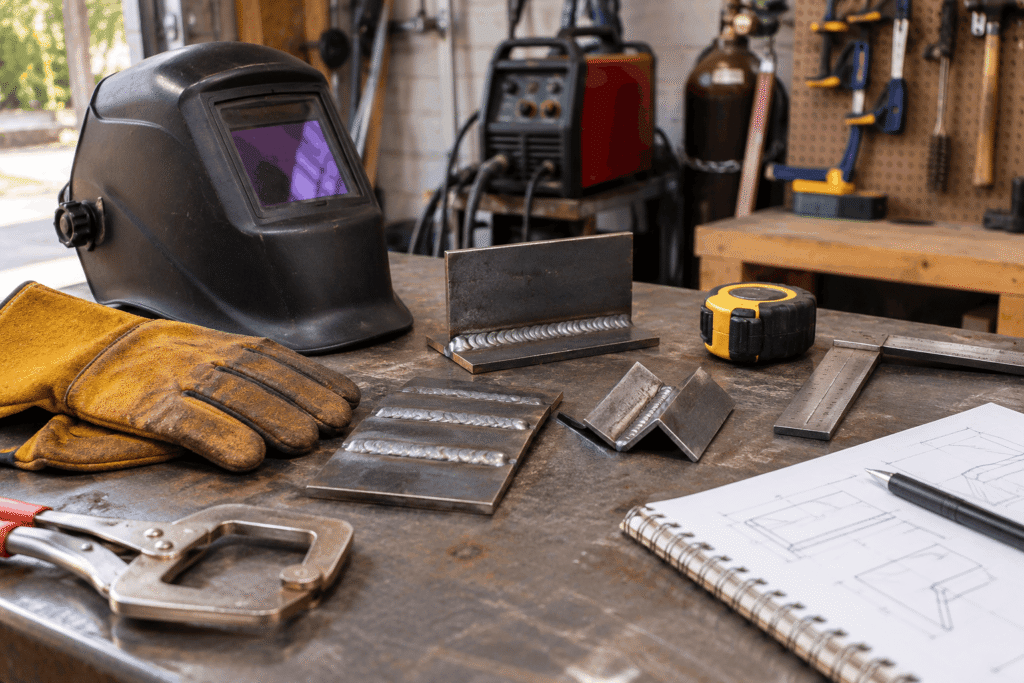
Once the weld cools sufficiently, chip away the slag and clean the bead with a wire brush. Look for consistent bead shape, visible defects, and signs of poor fusion.
One thing worth remembering: a good-looking weld isn’t necessarily a strong weld. Even a smooth bead can hide inadequate penetration or lack of fusion.
What Should You Look for When Buying a Flux Welder?
A cheap machine isn’t necessarily a bad choice for occasional garage work. But don’t buy one based on maximum amperage alone.
Here are the specifications I’d pay attention to.
1. Input voltage and electrical requirements
Many compact flux welders operate on 120V household power. However, the welder’s input current and the circuit’s capacity determine how comfortably you can use it.
Check the manufacturer’s requirements before assuming any garage outlet will work.
2. Gasless-only or MIG/flux compatibility
A gasless-only machine can be a practical budget choice for steel repairs.
But if you expect to work on thin sheet metal later, a machine supporting both MIG and flux-core welding gives you more flexibility.
3. Duty cycle
Duty cycle tells you how long the welder can operate at a specified output during a ten-minute period.
For instance, the Forney 141 FC-i has a 30% duty cycle at 90 amps. That means three minutes of welding at 90A during a ten-minute cycle, followed by seven minutes of cooling.
For small brackets and occasional repairs, that might be plenty. Longer welds can make a low duty cycle frustrating.
4. Wire compatibility and replacement parts
Check supported wire sizes, spool capacity, contact tips, and drive rollers.
Common flux-core wire diameters include 0.030 and 0.035 inch, but not every machine supports both.
Also, don’t assume all flux-cored wire is interchangeable. Some E71T-GS products target single-pass work, while certain E71T-11 wires permit multiple passes under specified conditions.
Always check the electrode’s data sheet before choosing it for a project.
Is Flux-Core Welding Safe for a Home Garage?
Flux-core welding can be used in a properly prepared home workshop, but the lack of a shielding gas cylinder doesn’t make the process fume-free.
Welding fumes can contain hazardous metals, including manganese. The CDC’s guidance on welding fumes and manganese explains the health risks associated with inhaling manganese-containing fumes.
Ventilation makes a measurable difference. In a NIOSH investigation of indoor welding ventilation, researchers measured welding fume exposure levels around five times lower with local exhaust ventilation operating than without it under the tested conditions.
The practical lesson is simple: don’t weld in a closed garage without effective fume controls. Use suitable source-capture ventilation where feasible, keep your breathing zone away from the plume, and assess the need for appropriate respiratory protection.
Remove hazardous coatings before welding, and never assume that outdoor air movement alone provides adequate protection.
You also need to consider arc radiation, electrical shock, flying sparks, hot metal, and fire hazards. Keep a suitable fire extinguisher nearby and follow the welding machine’s safety instructions.
Is a Flux Welder Right for You?
For occasional steel projects around the house, a compact self-shielded flux welder can be a sensible purchase. You get a portable wire-fed machine without the added expense and hassle of a shielding gas cylinder.
But if your plans include thin auto-body panels or a lot of clean indoor fabrication, I’d lean toward a MIG/flux combination machine. It gives you more options as your welding skills develop.
Start with the projects you want to tackle, then compare electrical requirements, compatible wire, and duty cycle. Those details matter more than the biggest amperage number printed on the box.
Read more:
Final Words
A flux welder is a useful tool for outdoor steel repairs, DIY fabrication, and general garage work. Self-shielded models keep the setup simple by eliminating the need for a separate gas cylinder.
Just remember that easy setup doesn’t mean every welding job is easy. Match the machine and wire to your material, learn the correct technique, and take ventilation and safety seriously. That’s the best starting point for getting reliable results.
Frequently Asked Questions
Is a flux-core welder good for beginners?
Yes. Flux-core welders are beginner-friendly because they use continuously fed wire and don’t require a separate gas cylinder for self-shielded welding. However, controlling travel speed, heat, and spatter still takes practice.
Do you need gas for a flux welder?
Not for self-shielded flux-core welding. The flux inside the wire provides the necessary shielding. Gas-shielded flux-core welding, however, requires an external shielding gas supply.
Are flux-core welds as strong as MIG welds?
Yes, properly made flux-core welds can meet strength requirements comparable to MIG welds. Actual weld strength depends on the filler metal, base material, joint design, welding procedure, and weld quality rather than the process name alone.
Can you weld aluminum with a flux-core welder?
Standard gasless flux-core welders aren’t suitable for welding aluminum. A properly configured MIG or TIG welder is a more practical choice.
Can you use flux-core wire in any MIG welder?
No. The machine must support the wire type, required polarity, feed system, and output settings. Check the welder’s manual before switching from solid MIG wire to flux-core wire.
Can a 120V flux welder weld 1/4-inch steel?
Some 120V flux welders advertise the ability to weld 1/4-inch mild steel under specified conditions. But that doesn’t guarantee adequate penetration or strength for every joint. Always check the manufacturer’s ratings and the requirements of your project.

Mark Reynolds is the founder and senior editor of ToolCruiser, with over fifteen years of hands on experience working in real home garage workshops. His background includes home repairs, woodworking, garage builds, and small scale metal fabrication. Mark oversees all core content and product testing, focusing on real world performance, safety, power requirements, and long term value for homeowners using standard tools and setups.
Pingback: How Long Does It Take to Become a Welder? - ToolCruiser