
Finding the best welder for beginners comes down to choosing a machine that’s easy to control, fits your budget, and has enough power for the projects you want to tackle.
MIG and flux-core welders are great starting points, while stick, TIG, and multiprocess machines offer different advantages as your skills improve.
We tested 12 welding machines and selected the 9 best welders for beginners based on their ease of use, welding capabilities, controls, portability, and overall value.
Best Welders for Beginners: Quick Comparison
Here’s a quick comparison of our top picks to help you find the right machine for your budget and workshop needs.
| Welder | Best for | Welding process | Input voltage | Max. output |
|---|---|---|---|---|
| PrimeWeld MIG180 | Learning different welding techniques | MIG, flux-core, stick | 120V/240V | 180A |
| YESWELDER 135A | Beginners on a tight budget | Flux-core, stick, Lift TIG | 110V | 135A |
| Forney Easy Weld 140 FC-I | Simple outdoor steel repairs | Flux-core | 120V | 140A |
| Hobart Handler 210MVP | Home garage fabrication | MIG, flux-core | 115V/230V | 210A |
| Lincoln Electric Weld-Pak 225i | Outdoor stick welding projects | Stick, Touch Start TIG | 120V/230V | 225A |
| Weldpro 200A AC/DC TIG | Precision and aluminum welding | AC/DC TIG, stick | 110V/220V | 200A |
| Miller Multimatic 215 PRO | Long-term workshop use | MIG, flux-core, DC TIG, stick | 120V/240V | 215A |
| YESWELDER MCT-520 | Welding and cutting metal | MIG, flux-core, TIG, stick, plasma | 110V/220V | 200A welding, 50A cutting |
| ARCCAPTAIN MIG205MP | Beginners who prefer smart controls | MIG, flux-core, TIG, stick, plasma | 120V/240V | 205A |
9 Best Welders for Beginners in 2026: Our Top Picks
- Best Overall Welder for Beginners: PrimeWeld MIG180
- Best Budget Welder: YESWELDER 135A MIG
- Best Flux-Core Welder: Forney Easy Weld 140 FC-I
- Best MIG Welder for Home Use: Hobart Handler 210MVP
- Best Stick Welder: Lincoln Electric Weld-Pak 225i
- Best TIG Welder for Beginners: Weldpro 200A AC/DC TIG
- Best Multiprocess Welder: Miller Multimatic 215 PRO
- Best Welder and Plasma Cutter Combo: YESWELDER MCT-520
- Best Smart Welder: ARCCAPTAIN MIG205MP
1. Best Overall Welder for Beginners: PrimeWeld MIG180
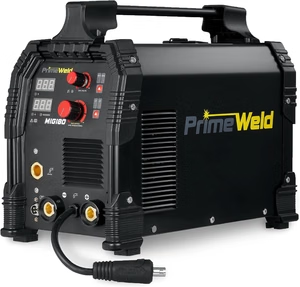
Key Specifications:
- Welding processes: MIG, flux-core, and stick
- Input voltage: 120V/240V
- Maximum output: 180A
- Duty cycle: 30% at 180A
- Weight: Around 30 lbs; aluminum spool gun included
The PrimeWeld MIG180 earns our top spot because it offers enough versatility for beginners without making the setup overly complicated. During our testing, one thing we appreciated was the flexibility to move between flux-core and gas MIG welding. Flux-core is convenient for outdoor repairs, while gas MIG gives you cleaner welds on thin steel when the settings are right.
We also liked the included aluminum spool gun. It keeps soft aluminum wire from traveling through a long MIG cable, reducing the risk of feeding problems. The dual-voltage design is another plus, especially if you’re starting with 120V power but plan to upgrade your garage wiring later.
However, the full 180A output requires 240V power, and the 30% duty cycle at maximum output limits longer welding sessions. For small fabrication jobs, steel brackets, and general garage repairs, we found its combination of features particularly appealing.
Pros:
- Includes a spool gun for aluminum MIG welding
- Supports MIG, flux-core, and stick welding
- Dual-voltage input offers more flexibility for home workshops
- 2T/4T trigger control helps with longer welds
Cons:
- Full 180A output requires 240V power
- No TIG welding capability
2. Best Budget Welder: YESWELDER 135A MIG
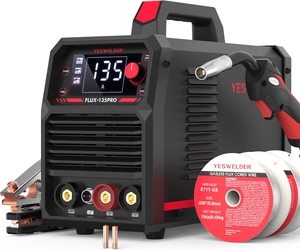
Key Specifications:
- Welding processes: Flux-core, stick, and Lift TIG
- Input voltage: 110V
- Maximum output: 135A
- Controls: Synergic wire-feed adjustment
- Weight: Approximately 11 lbs
If you’re buying your first welder on a tight budget, the YESWELDER 135A is worth considering. What stood out during our evaluation was how beginner-friendly the synergic control system is. It helps coordinate wire speed with welding output, so you don’t have to make every adjustment from scratch.
At just 11 lbs, this machine is also easy to move around a small garage. Its flux-core setup doesn’t require a shielding gas cylinder, making it convenient for practicing on scrap steel, repairing brackets, or handling occasional outdoor jobs. The 135A output is better suited to lighter fabrication than demanding, thick-steel projects.
The main limitation is that this isn’t a conventional gas MIG welder. Flux-core creates more spatter and slag, so expect some cleanup afterward. Lift TIG is also available, but you’ll need additional accessories. Still, for the price, it’s a practical way to start learning.
Pros:
- Synergic control helps beginners adjust wire-feed settings
- Weighs only around 11 lbs
- Supports stick welding in addition to flux-core
- No shielding gas cylinder required for flux-core welding
Cons:
- Doesn’t support gas-shielded MIG welding
- TIG torch and related equipment cost extra
3. Best Flux-Core Welder: Forney Easy Weld 140 FC-I
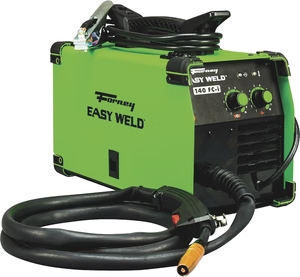
Key Specifications:
- Welding process: Gasless flux-core
- Input voltage: 120V
- Maximum output: 140A
- Duty cycle: 30% at 90A
- Weight: 19 lbs; supports .030-inch and .035-inch wire
The Forney Easy Weld 140 FC-I is a straightforward machine for beginners who want to concentrate on flux-core welding. During testing, we liked having separate voltage and wire-speed knobs. They make it easier to understand how each setting affects the weld instead of relying entirely on automatic adjustments.
Its gasless design is particularly useful for outdoor repairs. If you’re fixing a steel gate or fabricating a small bracket, you won’t need to carry a shielding gas cylinder around. Forney rates the machine for mild steel up to 1/4 inch under suitable conditions, which is respectable for a compact 120V welder.
One limitation we noticed when considering longer projects is the 30% duty cycle at 90A. You’ll need to allow cooling time during sustained welding. It’s also strictly a flux-core machine, so you can’t switch to gas MIG later. But for learning wire-feed welding and tackling small steel repairs, its simplicity is a real advantage.
Pros:
- Independent voltage and wire-speed controls
- Supports .030-inch and .035-inch flux-core wire
- Runs on 120V power with a suitable 20A circuit
- Metal housing and 19 lb weight suit portable work
Con¢s:
- No gas MIG, stick, or TIG capability
- 30% duty cycle at 90A limits continuous welding
4. Best MIG Welder for Home Use: Hobart Handler 210MVP
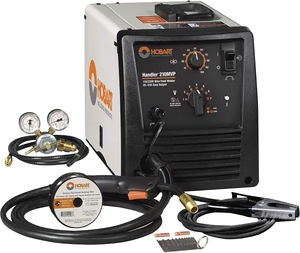
Key Specifications:
- Welding processes: MIG and flux-core
- Input voltage: 115V/230V
- Maximum output: 210A
- Duty cycle: 30% at 150A on 230V
- Weight: Approximately 79 lbs; spool-gun ready
The Hobart Handler 210MVP is a strong choice for beginners planning to build a dedicated home welding setup. Its 210A output gives you more room for larger steel projects, while the dual-voltage plugs let you use either 115V or 230V power.
One thing that stood out to us was the Quick Select drive-roll system. Changing between compatible wire sizes is straightforward, and the adjustable voltage and wire-feed controls provide the flexibility needed to fine-tune your welds. For projects such as workbenches, steel frames, and automotive repairs, that control is useful.
The downside is its weight. At around 79 lbs, we wouldn’t recommend moving it around the workshop without a cart. It’s also considerably more expensive than compact beginner welders. However, if you want a dedicated MIG machine that can handle more demanding projects as your skills improve, the Hobart makes sense.
Pros:
- 115V/230V MVP plugs provide flexible power options
- Quick Select drive rolls simplify wire changes
- 210A output supports a broad range of steel fabrication
- Spool-gun ready for aluminum MIG welding
Cons:
- Heavy 79 lb construction limits portability
- High price for occasional DIY welding
5. Best Stick Welder: Lincoln Electric Weld-Pak 225i
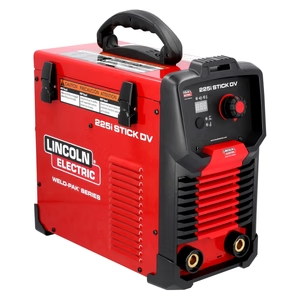
Key Specifications:
- Welding processes: Stick and optional Touch Start TIG
- Input voltage: 120V/230V
- Output range: 10–225A
- Duty cycle: 30% at 225A on 230V
- Weight: Approximately 20 lbs
The Lincoln Electric Weld-Pak 225i is a good starting point for anyone interested in stick welding. Unlike MIG machines, it doesn’t need a wire feeder or shielding gas, making it practical for outdoor repairs and thicker steel projects.
During our evaluation, we appreciated the straightforward amperage control and compact design. The machine weighs around 20 lbs, so carrying it to a work area is manageable. Its adjustable output also gives beginners room to practice with different electrode sizes and welding currents.
Keep in mind that the maximum 225A output requires 230V power. On 120V, the available output is much lower. Stick welding also takes patience, especially when learning to strike the arc and maintain the correct electrode distance. For gates, steel brackets, and outdoor maintenance, though, the Lincoln is a capable choice.
Pros:
- Wide 10–225A adjustment range
- Supports several common stick electrode types
- Lightweight design suits portable repair work
- Includes electrode holder, work clamp, and cables
Cons:
- Full output requires 230V power
- No MIG or flux-core wire-feed capability
6. Best TIG Welder for Beginners: Weldpro 200A AC/DC TIG
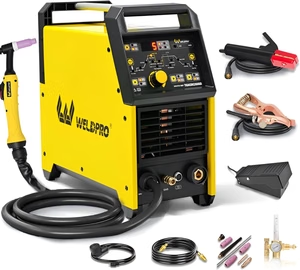
Key Specifications:
- Welding processes: AC/DC TIG, pulsed TIG, and stick
- Input voltage: 110V/220V
- Maximum output: 200A
- Duty cycle: 40% at 200A
- Controls: HF start, pulse adjustment, and foot pedal
The Weldpro 200A AC/DC TIG is our choice for beginners who want to learn precise welding on steel, stainless steel, and aluminum. Its AC/DC capability is especially useful because AC TIG is suited to aluminum, while DC TIG works well for steel.
What impressed us about the setup was the included foot pedal. It allows you to adjust welding current while working, which is valuable when controlling heat on thin metal. We also appreciated the high-frequency start, which lets you initiate the arc without touching the tungsten to the workpiece.
There is a learning curve, though. TIG requires more hand coordination than MIG, and you’ll need shielding gas, tungsten electrodes, and filler rods. The numerous pulse and AC settings may also feel intimidating at first. Still, for beginners interested in cleaner, more controlled welds, the Weldpro provides useful features without requiring a separate aluminum TIG machine.
Pros:
- AC/DC operation supports aluminum and steel TIG welding
- Included foot pedal allows real-time heat adjustment
- HF start reduces tungsten contamination during arc initiation
- Adjustable pulse settings help manage heat on thinner materials
Cons:
- More difficult to learn than MIG or flux-core welding
- Requires argon and additional TIG consumables
7. Best Multiprocess Welder: Miller Multimatic 215 PRO
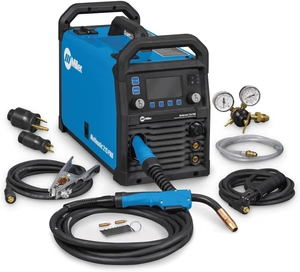
Key Specifications:
- Welding processes: MIG, flux-core, DC TIG, and stick
- Input voltage: 120V/240V
- Maximum output: Approximately 215A
- Controls: Auto-Set and program memory
- Special features: BeadVision and upgradeable software
The Miller Multimatic 215 PRO is an excellent option for serious beginners who want to learn multiple welding processes. Rather than buying separate MIG, stick, and TIG machines, you can start with MIG and explore other methods as your confidence grows.
During our evaluation, the Auto-Set system was one of the most appealing features. It helps establish starting settings for MIG welding, reducing the guesswork involved in balancing voltage and wire-feed speed. We also liked the program memory, which makes it convenient to return to familiar settings when switching between projects.
Its biggest drawback is the price. At over $2,000, it’s a substantial investment for someone who only needs to repair a few brackets each year. The TIG function is also DC-only, so it won’t replace an AC TIG machine for aluminum. However, for a dedicated home workshop, its combination of controls and welding processes offers plenty of room to develop your skills.
Pros:
- Combines MIG, flux-core, DC TIG, and stick welding
- Auto-Set simplifies initial MIG adjustments
- Program memory saves frequently used settings
- Dual-voltage operation suits different workshop setups
Cons:
- Expensive for occasional beginner projects
- DC TIG doesn’t support conventional AC TIG aluminum welding
8. Best Welder and Plasma Cutter Combo: YESWELDER MCT-520
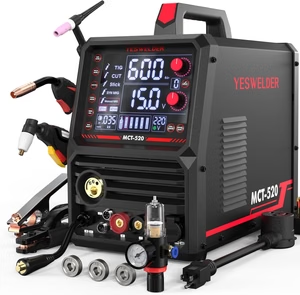
Key Specifications:
- Processes: MIG, flux-core, TIG, stick, and plasma cutting
- Input voltage: 110V/220V
- Maximum welding output: 200A
- Plasma cutting output: Up to 50A
- Weight: Approximately 27 lbs
The YESWELDER MCT-520 is a practical choice for beginners interested in both cutting and welding metal. If you’re building a steel table or making custom brackets, having a plasma cutter and welder in one machine can save workshop space.
One feature we liked was the synergic MIG control, which makes initial setup easier before you start fine-tuning the settings yourself. The machine also supports stick and TIG welding, giving you several options for different projects. At around 27 lbs, it’s relatively portable for a multiprocess unit.
However, plasma cutting requires a separate air compressor, which adds to the total cost. Switching between welding and cutting also involves more setup than using a dedicated MIG welder. For beginners planning complete fabrication projects, though, the MCT-520 offers a useful combination of capabilities.
Pros:
- Combines welding and plasma cutting in one machine
- Synergic MIG settings simplify initial adjustments
- Supports multiple welding processes
- Compact 27 lb design saves workshop space
Cons:
- Plasma cutting requires an air compressor
- Changing processes involves extra setup and accessories
9. Best Smart Welder: ARCCAPTAIN MIG205MP
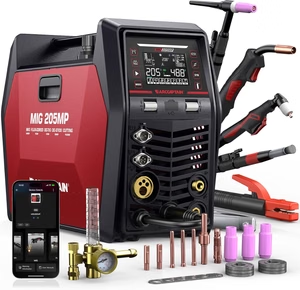
Key Specifications:
- Processes: MIG, flux-core, TIG, stick, and plasma cutting
- Input voltage: 120V/240V
- Maximum welding output: 205A
- Controls: Smartphone app and large LED display
- Special features: Synergic settings and parameter memory
The ARCCAPTAIN MIG205MP is an interesting choice for beginners who prefer digital controls over traditional adjustment knobs. It combines several welding processes with app-based adjustments, making it easier to manage and repeat settings across different projects.
What stood out during our evaluation was the parameter memory. Once you’ve found suitable settings for a particular wire and material thickness, you can save them instead of adjusting everything again. The large display also makes welding parameters easier to read, while the synergic MIG function helps simplify initial setup.
The downside is that the numerous modes can feel overwhelming when you’re just learning. You’ll still need to understand wire selection, polarity, and shielding gas, regardless of how smart the controls are. Some functions also require extra accessories. For tech-minded beginners who want room to experiment, however, the MIG205MP offers more flexibility than a basic MIG machine.
Pros:
- App-based controls allow remote parameter adjustments
- Memory presets make repeat projects easier to set up
- Large LED display improves visibility of welding settings
- Combines multiple welding and cutting functions
Cons:
- Numerous operating modes increase the learning curve
- Plasma cutting and some welding functions require extra equipment
How to Choose the Best Welder for Beginners
The right beginner welder depends on the metal you’re working with, your available power supply, and the projects you have in mind. Before buying, consider these six factors.
Choose the Right Welding Process
Each welding process has its strengths, and some are easier to learn than others.
- MIG welding: One of the easiest processes for beginners. A continuously fed wire makes it easier to maintain the arc, while shielding gas helps produce cleaner welds. It’s ideal for automotive repairs, mild steel, and general garage fabrication.
- Flux-core welding: Similar to MIG, but self-shielded flux-core wire doesn’t require a separate gas cylinder. It’s convenient for outdoor repairs, although it produces more spatter and slag.
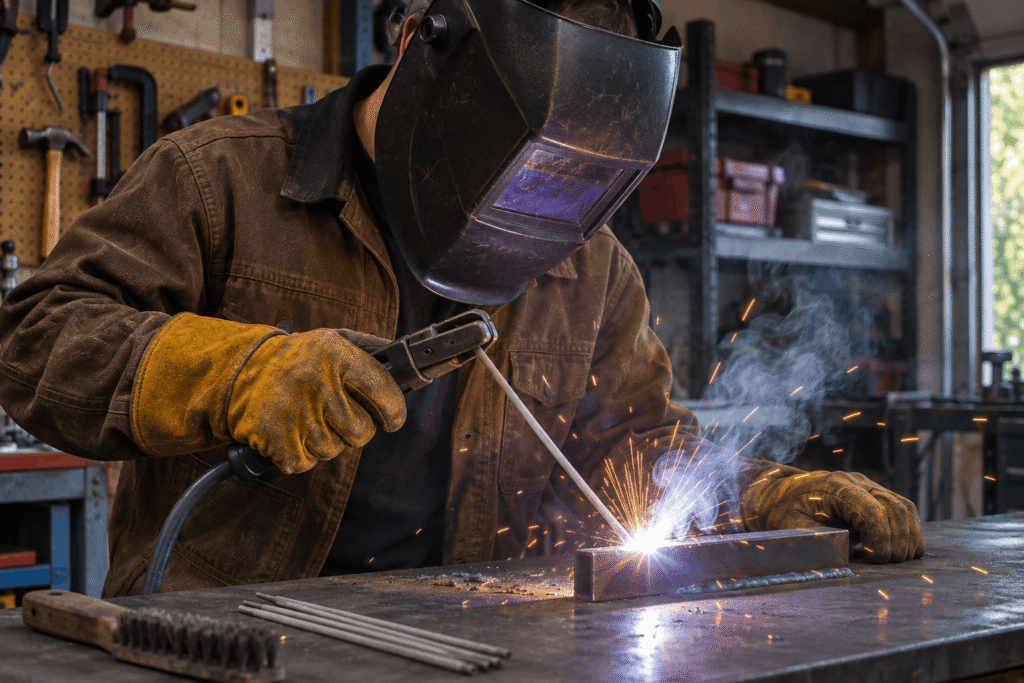
- Stick welding: A practical choice for outdoor work, steel gates, and equipment repairs. It handles less-than-perfect steel better than TIG, but maintaining the arc and controlling the electrode takes practice.
- TIG welding: Offers excellent control for thin metal, stainless steel, and aluminum when using the appropriate AC/DC machine. However, coordinating the torch, filler rod, and amperage control takes more skill.
- Multiprocess welders: Combine several welding methods in one machine. They’re useful if you want to learn different techniques, but switching processes may require extra torches, cables, and accessories.
For most first-time buyers, I’d start with MIG or flux-core welding unless a particular project requires something else.
Check Your Power Supply: 120V vs. 240V
Many beginner welders run on 120V household power, making them convenient for home garages. They’re suitable for lighter steel repairs, small brackets, and occasional fabrication.
A 240V welder provides access to higher output, making it a better choice for thicker materials and more demanding projects.
However, dual-voltage doesn’t mean you’ll get the same welding power from both outlets. Always check the machine’s input-current requirements and your circuit’s breaker rating before connecting it.
Understand Amperage and Metal Thickness
Amperage affects how much heat a welder can deliver. Higher output gives you more flexibility when welding thicker steel, but maximum amperage alone doesn’t determine welding performance.
For example, a 140A machine may handle light fabrication and small repairs, while a 200A welder provides more room for heavier projects.
Also, check the minimum output. If you plan to work on thin automotive sheet metal, low-amperage control can be just as important as maximum power.
Consider Duty Cycle
Duty cycle tells you how long a welder can operate within a 10-minute period at a specified output.
For example, a 30% duty cycle at 150A means the machine can weld for three minutes at that output under its rated test conditions before requiring cooling time.
For occasional repairs and short welds, a lower duty cycle may be sufficient. If you’re building larger frames or running longer beads, look for a machine with a higher duty cycle at the amperage you intend to use.
Look for Beginner-Friendly Controls
Simple controls can make learning considerably easier. Look for clear voltage and wire-speed adjustments, readable displays, and settings that are easy to repeat.
Synergic MIG controls are helpful because they coordinate welding parameters based on your selections. Machines such as the Miller Multimatic 215 PRO also offer automatic starting settings.
Still, I recommend learning how voltage, wire speed, and travel speed affect your welds. Automatic settings are a starting point, not a substitute for understanding the process.
Calculate the Total Setup Cost
The purchase price isn’t the only expense. Depending on the machine and welding process, you may also need:
- Shielding gas and regulators: Required for gas MIG and TIG welding.
- Welding wire, electrodes, and filler rods: Choose consumables that match your welding process and material.
- TIG torches, spool guns, and other accessories: Some multiprocess machines require separate accessories to use every available function.
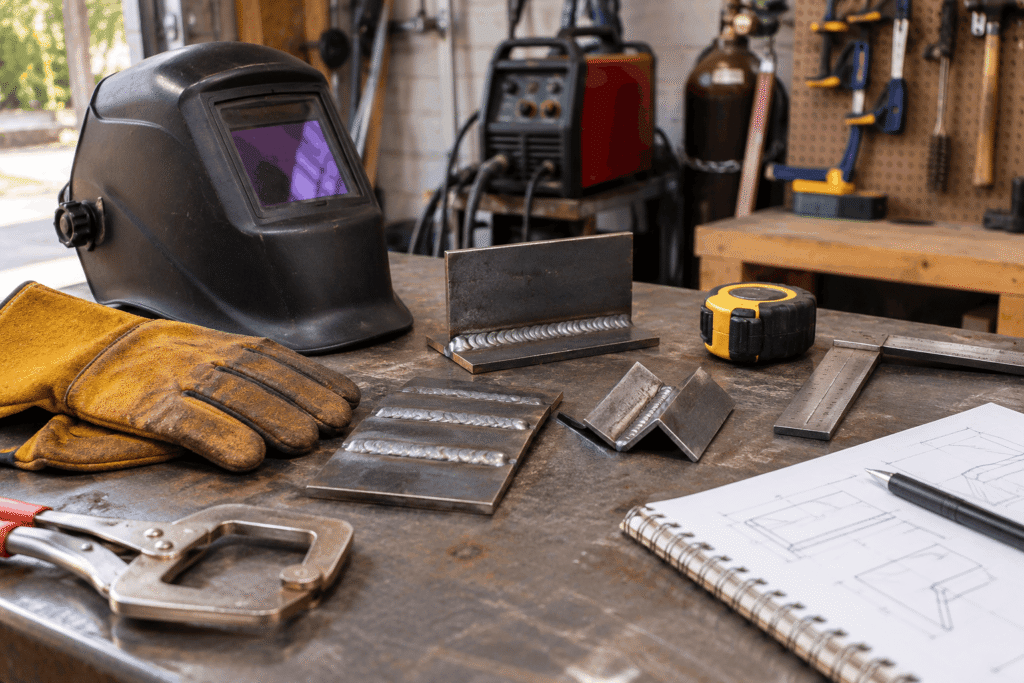
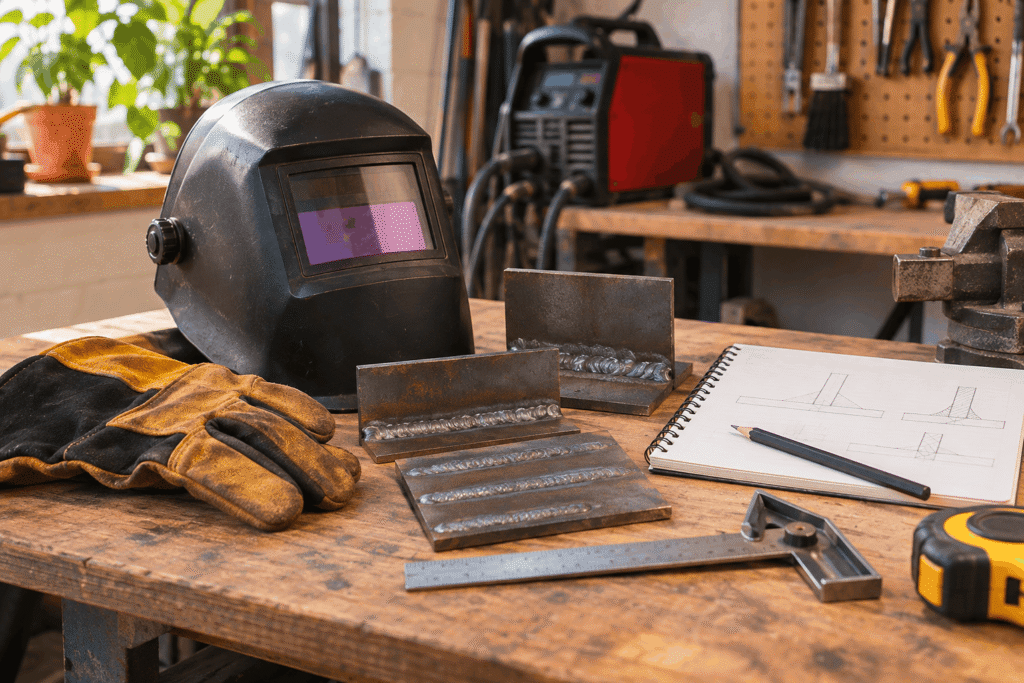
- Safety equipment: A suitable welding helmet, gloves, flame-resistant clothing, eye protection, and ventilation equipment.
For a beginner on a limited budget, a flux-core machine can be more affordable to get running because it doesn’t require a shielding gas cylinder.
Which Type of Welder Is Easiest for Beginners?
MIG welding is the easiest welding process for most beginners because the machine feeds the wire automatically, allowing you to focus on torch angle, travel speed, and maintaining a consistent weld. Self-shielded flux-core is another beginner-friendly option, especially for outdoor repairs without shielding gas.
Here’s how the four main welding processes compare.
| Welding Type | Learning Difficulty | Best Applications | Shielding Gas | Main Drawback |
|---|---|---|---|---|
| MIG | Easy | Garage repairs, automotive work, fabrication | Yes | Gas equipment adds cost and wind can disturb shielding |
| Flux-Core | Easy to Moderate | Outdoor repairs, gates, steel brackets | No, for self-shielded wire | More spatter and slag cleanup |
| Stick | Moderate | Farm equipment, outdoor steel repairs | No | Arc control and electrode handling require practice |
| TIG | More Difficult | Thin metal, stainless steel, aluminum | Yes | Requires greater hand coordination and preparation |
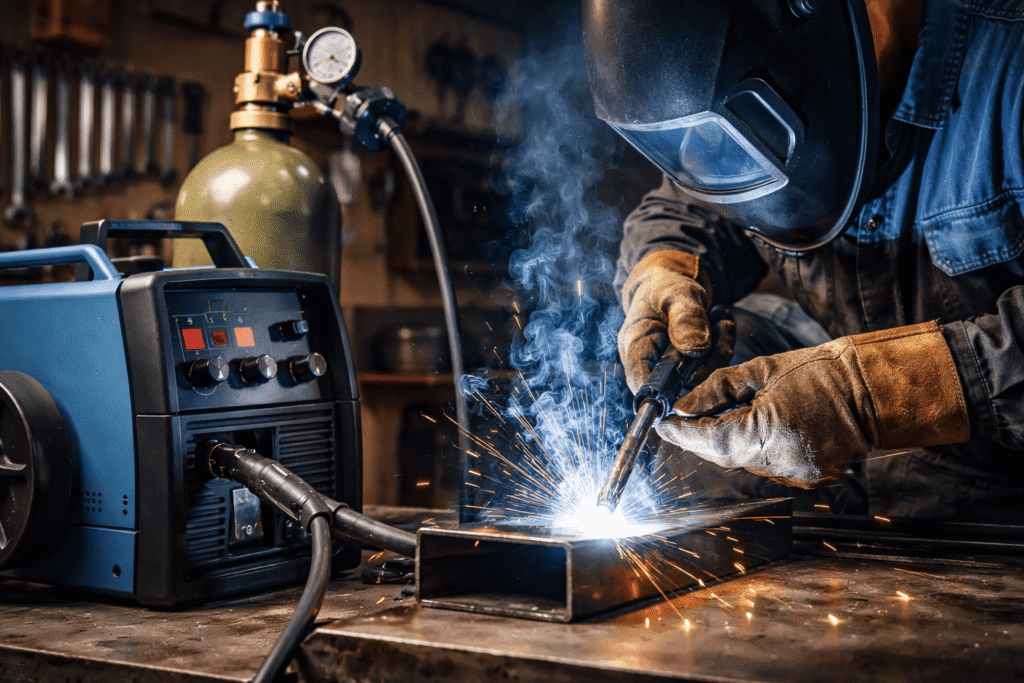
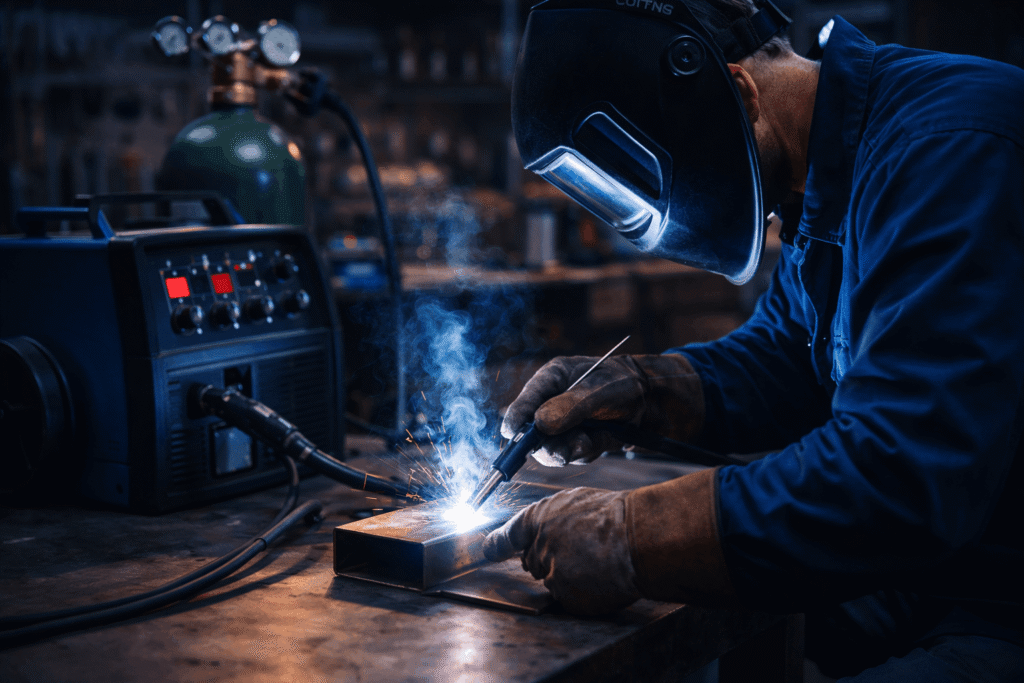
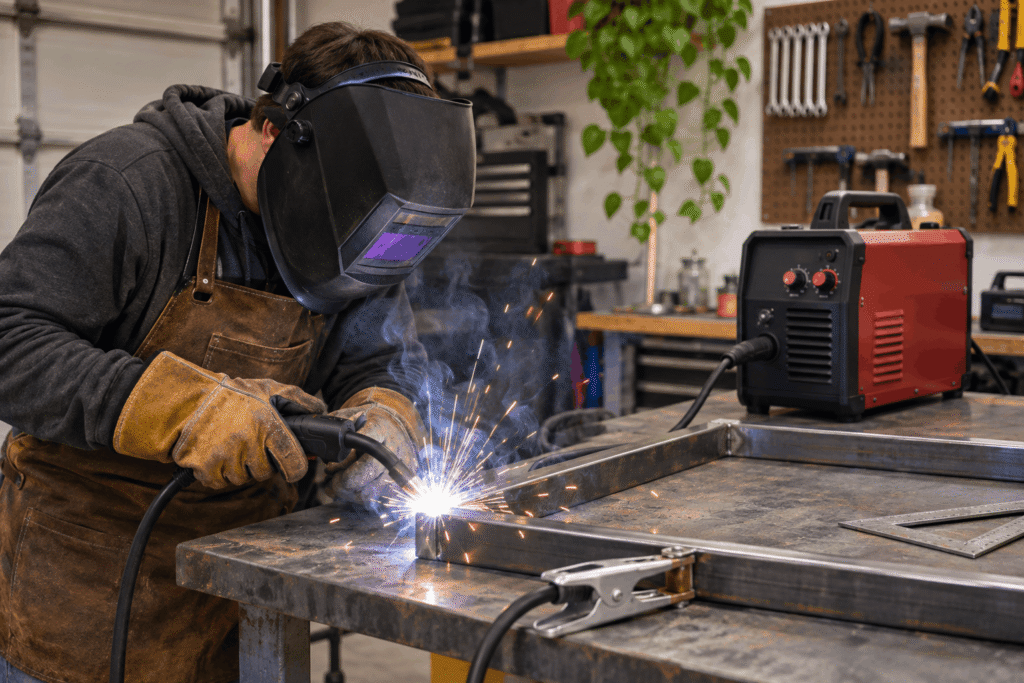
Essential Welding Safety Tips for Beginners
Welding exposes you to intense light, heat, electrical hazards, and harmful fumes. According to the CDC’s National Institute for Occupational Safety and Health (NIOSH), earlier research found that welders had an estimated 40% higher risk of lung cancer, highlighting the importance of proper ventilation and protection.
Follow these safety tips before starting:
- Wear a welding helmet: Choose the correct filter shade and wear safety glasses underneath.
- Protect your skin: Use welding gloves, flame-resistant clothing, and leather boots.
- Control fumes: Ensure proper ventilation and use fume extraction, especially when working with coated metals.
- Prevent fires: Remove flammable materials and keep a fire extinguisher nearby.
- Check electrical safety: Inspect cables and connections. Never weld in wet conditions.
- Prepare your workpiece: Clean and secure the metal. Never weld sealed or potentially hazardous containers.
If you’re new to welding, consider learning the basics under an experienced welder’s supervision.
Final Words
The best beginner welder isn’t necessarily the most powerful or expensive machine. What matters is choosing one that matches your projects, available power, and willingness to learn.
For someone who wants a versatile machine for garage repairs, small fabrication, and future aluminum MIG projects, I’d recommend the PrimeWeld MIG180. Its multiple welding processes and included spool gun provide plenty of room to develop your skills.
If you’re just getting started and want to keep costs low, the YESWELDER 135A is a sensible alternative. It’s lightweight, straightforward to set up, and capable of handling basic flux-core and stick welding projects.
Start with clean scrap metal, learn the correct settings, and focus on producing consistent, sound welds before moving on to more demanding work.
FAQs
What is the easiest welder for a beginner to use?
A MIG welder is the easiest option for most beginners because it feeds welding wire automatically and requires less hand coordination than TIG or stick welding. A machine with synergic controls can make the initial setup even simpler.
Is MIG or stick welding better for beginners?
MIG welding is generally easier to learn and works well for home fabrication, automotive repairs, and thinner steel. Stick welding is better suited to outdoor repairs and some heavier steel projects, but controlling the electrode and arc takes more practice.
Can you use a welder on a regular household outlet?
Yes, many 120V welders can run on household power, provided the circuit meets the machine’s electrical requirements. Check the breaker rating, input amperage, outlet condition, and manufacturer’s instructions before connecting the welder.
How much should a beginner spend on a welder?
A beginner can find a basic flux-core welder for around 150–350, while more versatile MIG machines may cost 400–800 or more. Remember to budget for protective equipment, consumables, and shielding gas if your chosen process requires it.
Is gasless MIG welding good for beginners?
Yes. Gasless MIG, commonly referring to self-shielded flux-core welding, is a practical starting point because it doesn’t require a separate shielding gas cylinder. However, it produces more spatter and slag than gas-shielded MIG, so additional cleanup is necessary.
Can beginners weld aluminum?
Yes, beginners can learn aluminum welding with a suitable MIG welder and spool gun or an AC TIG machine. Aluminum requires careful cleaning, appropriate filler material, and good heat control, so practicing on scrap pieces before attempting important projects is essential.

Mark Reynolds is the founder and senior editor of ToolCruiser, with over fifteen years of hands on experience working in real home garage workshops. His background includes home repairs, woodworking, garage builds, and small scale metal fabrication. Mark oversees all core content and product testing, focusing on real world performance, safety, power requirements, and long term value for homeowners using standard tools and setups.
Pingback: A Complete Beginner’s Guide to Welding at Home (Welding for Beginners) - ToolCruiser