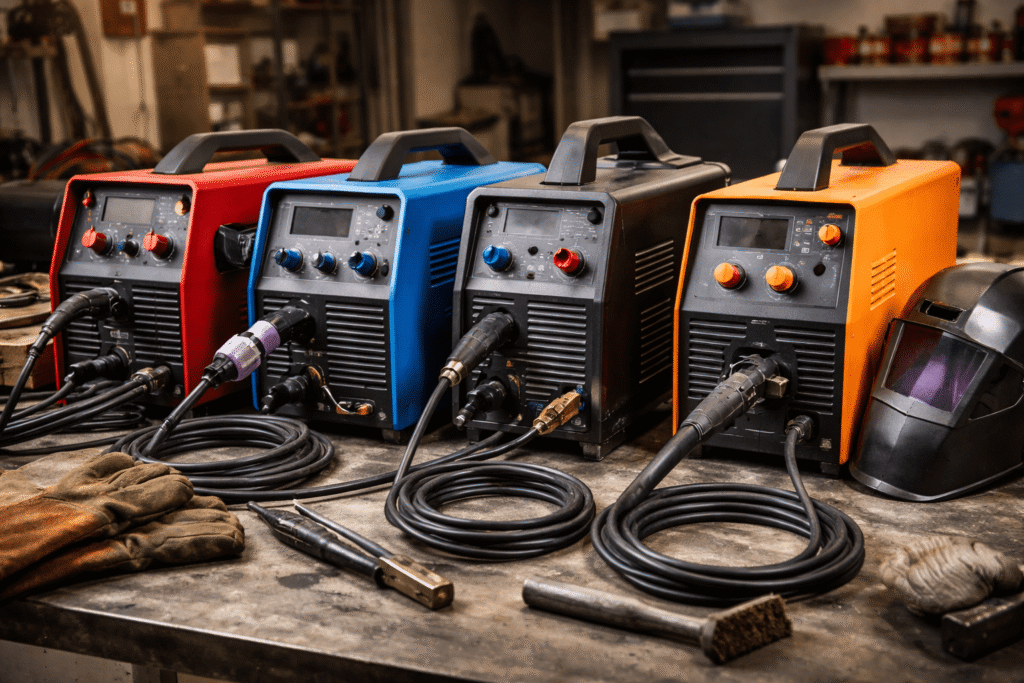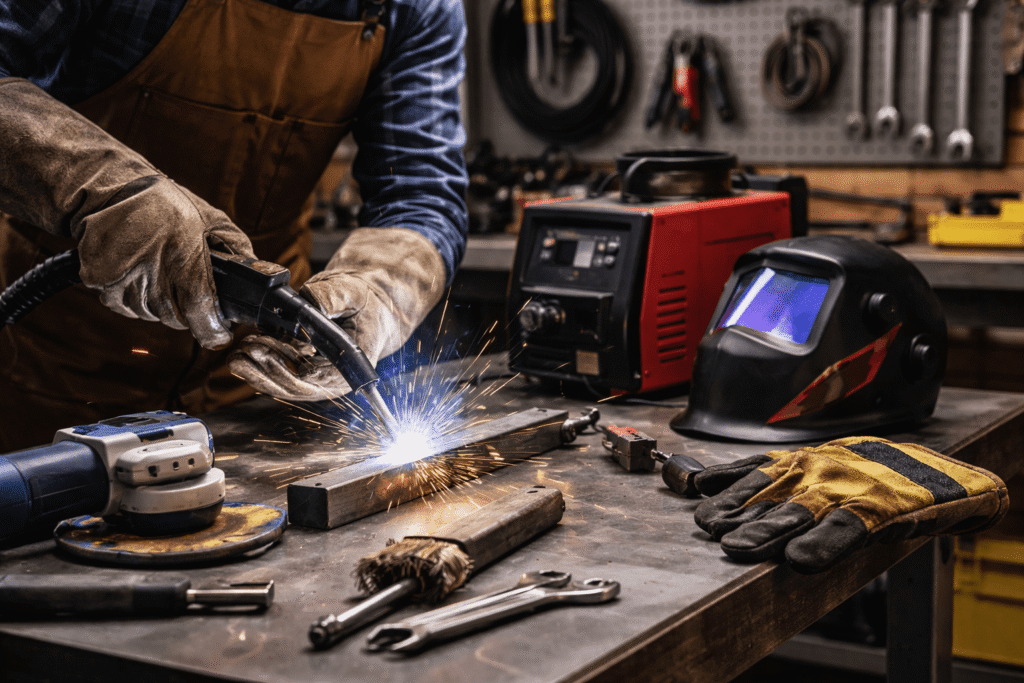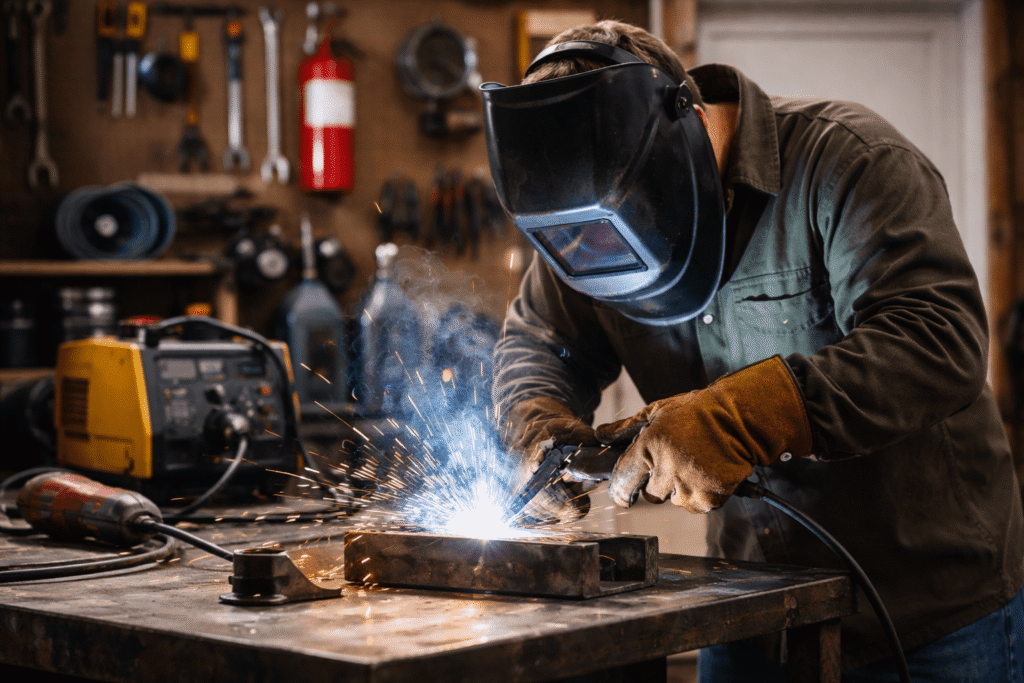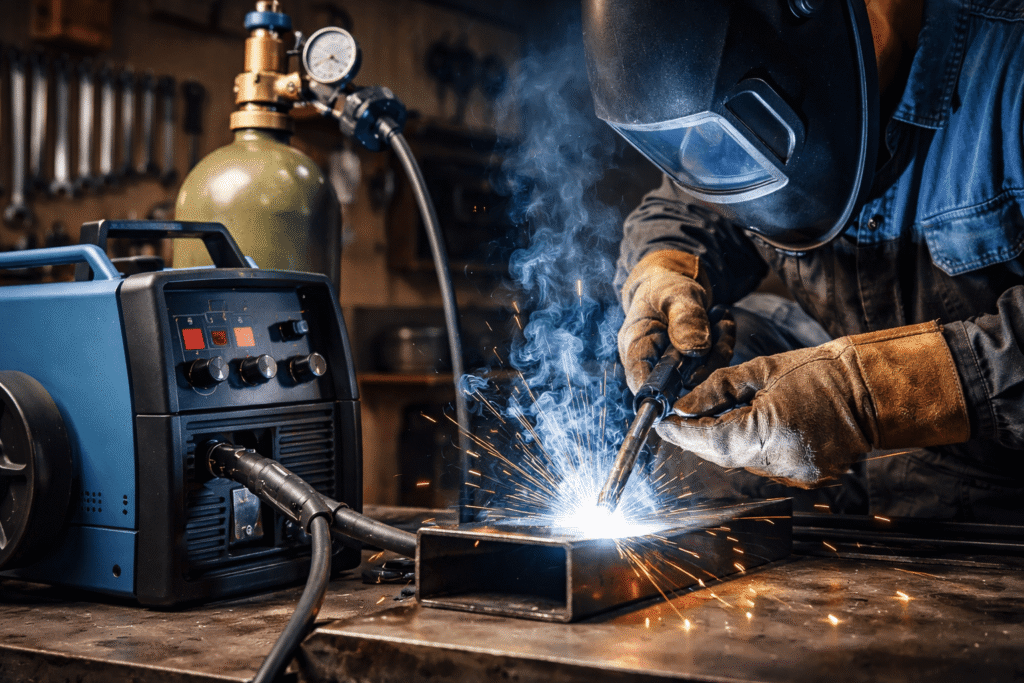
A TIG welder is a welding machine used when you need clean, precise, and controlled welds, especially on thin metal, aluminum, or stainless steel. Most people start looking into TIG welding because MIG feels too messy, too hot, or too limited for the kind of work they want to do.
If you have ever seen a smooth, stacked bead weld on a bike frame or stainless exhaust, that finish is usually the reason TIG welding enters the conversation.
This article explains what a TIG welder is, how it actually works in real use, and what parts matter most when you are setting one up or deciding if it is the right tool for your work.
What Is a TIG Welder?
A TIG welder is a welding machine that uses a non-consumable tungsten electrode to create an arc, while the welder manually adds filler metal if needed. Shielding gas, usually pure argon, protects the weld from contamination.
Unlike MIG or stick welding, a TIG welder gives you full control over heat and filler separately.
That is why it is often chosen for detailed work, thin material, and metals that show mistakes easily. You are not just pulling a trigger. You are controlling the puddle in real time.
In simple terms, a TIG welder is less forgiving but far more precise. It rewards patience, steady hands, and practice, and it punishes rushing or poor setup.
How Does a TIG Welder Work?
A TIG welder works by creating an electric arc between a tungsten electrode and the metal being welded. The heat from that arc melts the base metal and forms a weld puddle. Filler rod is added by hand only if the joint needs it.
The basic process looks like this in real use.
- The tungsten electrode is sharpened and installed in the TIG torch
- Shielding gas flows before the arc starts to protect the weld area
- The arc is started using a foot pedal or torch switch
- Heat is adjusted constantly to control the weld puddle
- Filler rod is dipped into the puddle as needed
- Gas continues flowing briefly after stopping to protect cooling metal
What matters most is heat control. On thin stainless or aluminum, it is very easy to start too hot and warp the edge before you even realize it.
Most beginners learn fairly quickly that backing off the pedal sooner than expected produces cleaner, flatter welds with less distortion. This is why TIG welding feels more like guiding molten metal than forcing it together.
Main Parts of a TIG Welder
A TIG welder system is more than just the power machine. Each part affects how easy the welder is to use and how clean the final weld looks.
Power Source
The power source controls the welding current. Modern TIG welders allow fine adjustment of amperage and often support both AC and DC output.
DC is used for steel and stainless steel. AC is needed for aluminum because it helps break through the oxide layer that forms on the surface.
Without AC capability, aluminum welds often look dirty, lack penetration, and fail to bond properly even if the bead appears acceptable at first glance.
Stable current matters more than raw power. A smooth arc makes learning and control much easier.
TIG Torch
The torch holds the tungsten electrode and delivers shielding gas to the weld. Torch size and head style affect comfort and access in tight areas. A flexible torch head can make a big difference when welding frames or corners.
Good torches stay cool and provide consistent gas coverage, which directly affects weld quality.
Tungsten Electrode
Tungsten is what creates the arc. It does not melt during welding, but its type and shape matter a lot in real use. Beginners commonly dip the tungsten into the weld puddle while learning, which contaminates the tip and immediately destabilizes the arc.
Keeping a clean, properly sharpened tungsten often makes a bigger difference than adjusting machine settings.
Poor tungsten prep leads to arc wandering and contamination.
Shielding Gas System
Most TIG welding uses pure argon. The gas protects the molten weld from oxygen and nitrogen in the air. Without proper gas flow, welds become brittle, discolored, and weak.
Stainless steel welds are especially sensitive, and poor post-flow can cause welds that look fine initially to discolor or crack later as they cool.
Flow rate, hose condition, and post flow time all affect results, especially on stainless steel and aluminum.
Foot Pedal or Amperage Control
This is one of the biggest differences between TIG and other welding methods. A foot pedal lets you adjust heat while welding, much like controlling a gas pedal. This allows you to ease into thin edges, back off as the metal heats up, and finish clean without burn-through.
Once you get used to it, this control becomes hard to give up.
Ground Clamp
The ground clamp completes the electrical circuit. A poor ground causes arc instability and frustrating starts. Clean contact on bare metal is essential, especially on aluminum and painted parts.
This is a small part that causes many big problems when ignored.
What Metals Can You Weld With a TIG Welder?
TIG welding works on a wide range of metals, especially those that need clean welds and tight heat control. It is often the go-to process when the metal is thin, reactive, or visually exposed.
- Mild steel: TIG works well on thin mild steel, where MIG would be too hot or messy. You get smooth beads and precise control, which is useful for brackets, frames, and repair work that needs accuracy.
- Stainless steel: This is one of TIG welding’s strongest areas. It allows clean, low-contamination welds with good corrosion resistance, which matters for food equipment, exhaust systems, and medical or lab parts.
- Aluminum: With AC current and proper setup, TIG handles aluminum better than most other methods. It gives control over the oxide layer and helps avoid burn-through on thin aluminum parts.
- Chromoly and alloy steels: TIG is commonly used for chromoly tubing in roll cages and frames because it allows controlled heat input and strong, consistent joints.
- Copper, brass, and specialty metals: TIG can weld copper, bronze, and even titanium with the right gas and preparation, which is why it is used in aerospace and specialty fabrication.
Common Uses of TIG Welding
TIG welding is chosen when precision, appearance, and material control matter more than speed.
Automotive and Motorcycle Fabrication
TIG is widely used for exhaust systems, intake piping, aluminum tanks, and custom brackets because these parts are thin and exposed. Using a hotter, faster process often leads to burn-through, distortion, or welds that require heavy grinding to look acceptable.
These parts are often thin and visible, so clean welds and heat control make a big difference in both strength and appearance.
Aerospace and Aviation Work
Aircraft components demand consistency and minimal defects. TIG welding allows tight control over heat and penetration, which is critical when working with aluminum alloys, stainless steel, and titanium used in aviation.
Stainless Steel Fabrication
Commercial kitchens, food processing equipment, and medical tools rely on TIG welding for sanitary welds. Smooth beads are easier to clean and less likely to trap contaminants.
Bicycle and Performance Frames
High-end bike frames and racing components often use TIG welding because it allows precise control on thin tubing. Poor heat control can weaken these joints, so TIG is preferred despite the slower pace.
Artistic and Custom Metal Work
Metal art, sculptures, and decorative railings often use TIG welding because the welds can be shaped, blended, and finished cleanly without heavy grinding.
Is TIG Welding Easy for Beginners?
TIG welding is not easy for beginners, but it is learnable with patience and practice. It requires more coordination than MIG or stick welding because you control heat, torch angle, filler rod, and timing all at once.
For many people, it takes several weeks of regular practice before welds start to look consistent and predictable.
Most beginners struggle at first because TIG does not hide mistakes. Poor torch angle, shaky hands, or wrong heat settings show up immediately in the weld. This can feel frustrating early on.
That said, once the basics click, TIG teaches you more about how metal behaves under heat than any other welding process. Many experienced welders say learning TIG made them better at every other type of welding.
TIG Welding Pros and Cons
TIG welding produces excellent results, but it demands patience. It does not hide mistakes, and that is the tradeoff.
Advantages of TIG Welding
- High precision and control: Allows fine adjustment of heat and filler, making it ideal for thin metal and detailed work.
- Clean, high-quality welds: Produces smooth beads with minimal spatter and strong joint integrity.
- Versatile material range: Works on steel, stainless, aluminum, and specialty metals with proper setup.
- Professional finish: Welds often need little to no grinding, which saves time on visible parts.
Disadvantages of MIG Welding
- Slower welding speed: TIG takes more time than MIG, which matters in production or long welds.
- Steeper learning curve: Requires coordination and practice, especially for beginners.
- More setup complexity: Gas type, tungsten prep, and machine settings matter more.
- Higher equipment cost: TIG machines and accessories usually cost more than basic MIG setups.
TIG Welder vs Stick vs MIG (Quick Comparison)
TIG welding offers the most control and cleanest welds, MIG welding is faster and easier to learn, and stick welding is best for rough, outdoor, or dirty conditions. The right choice depends on material type, precision needs, and how forgiving you want the process to be.
If you mostly weld outdoors, on rusty steel, or in windy conditions, TIG welding often becomes more frustrating than practical.
Here is a simple side-by-side comparison to help you decide.
| Feature | TIG Welding | MIG Welding | Stick Welding |
|---|---|---|---|
| Ease of learning | Hardest to learn, requires coordination | Beginner friendly and forgiving | Moderate, but messy at first |
| Weld quality | Very clean and precise | Strong but less refined | Strong but rough looking |
| Speed | Slow | Fast | Moderate |
| Metal thickness | Best for thin materials | Thin to medium | Medium to thick |
| Outdoor use | Poor, sensitive to wind | Limited | Excellent |
What to Look for in a TIG Welder
If you are choosing a TIG welder, focus on features that give you stable arc control and fine heat adjustment. A good TIG welder should make learning smoother and give you predictable results on thin or sensitive metals.
- AC and DC capability: DC is required for steel and stainless steel, while AC is necessary for aluminum. A machine that offers both expands the range of materials you can weld.
- Low amperage control: A lower minimum output makes a big difference on thin metal, tubing, and edge joints, where overheating causes warping or burn through.
- Foot pedal or torch amperage control: Real-time heat control is one of TIG welding’s biggest advantages and helps prevent overheating as the metal warms up.
- Stable arc start: Features like high frequency or lift arc starting reduce tungsten contamination and make arc starts smoother, especially for beginners.
- Gas control and post flow adjustment: Adjustable gas flow and post flow timing protect the weld as it cools, which is critical for stainless steel and aluminum weld quality.
Bottom Line
A TIG welder is the right tool when precision, control, and weld appearance matter. It is slower and harder to learn than MIG or stick welding, but it gives unmatched control over heat and weld quality. If you work with thin metal, aluminum, stainless steel, or visible joints, TIG welding is often worth the extra effort.
FAQs
Is TIG welding stronger than MIG welding?
TIG welds are not automatically stronger, but they can be just as strong when done correctly. Strength depends more on joint design, penetration, and welder skill than the welding method itself.
Can a TIG welder weld aluminum and steel?
Yes, a TIG welder can weld both aluminum and steel. Aluminum requires AC current and proper setup, while steel and stainless steel are welded using DC current.
Is TIG welding hard to learn for beginners?
TIG welding has a steeper learning curve because it requires more coordination. With practice, beginners can learn it, but it takes longer to feel comfortable compared to MIG welding.
Do you need gas for TIG welding?
Yes, TIG welding requires shielding gas, usually argon. The gas protects the weld from contamination and is essential for clean, strong welds.
What is TIG welding best used for?
TIG welding is best used for thin metal, aluminum, stainless steel, and projects where appearance and precision matter. It is commonly used in fabrication, automotive work, and custom metal projects.

Alex Turner is a contributor at ToolCruiser who focuses on research driven writing and ongoing content updates. He works closely with editorial guidelines to ensure technical information is accurate, clearly explained, and easy to understand for DIY users. His role is to translate specs, features, and comparisons into practical guidance that reflects how tools are actually used in everyday home projects.