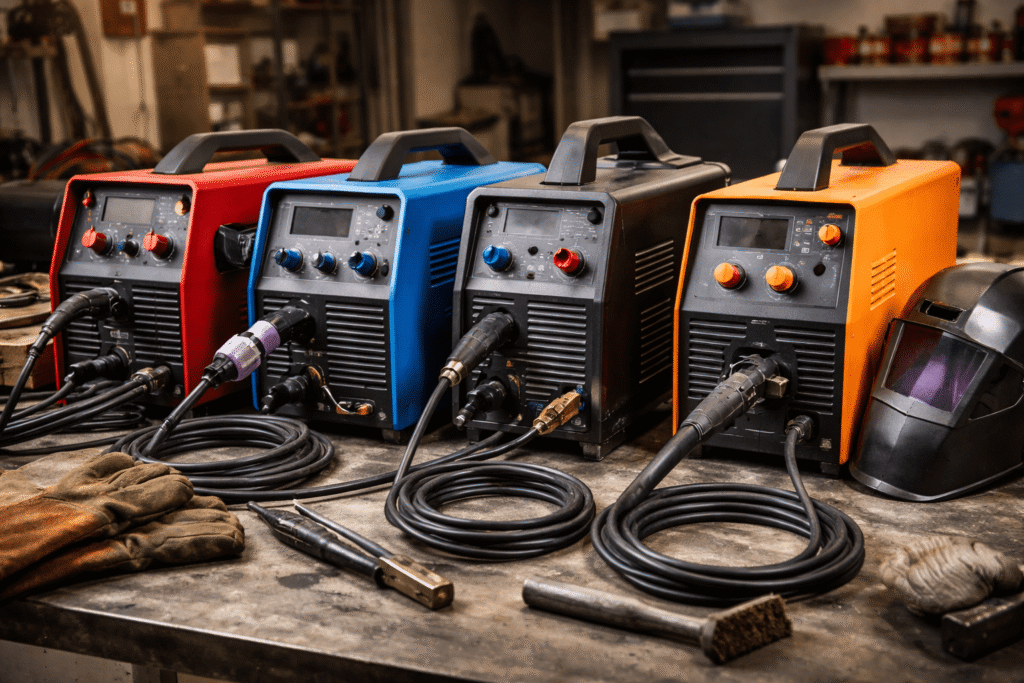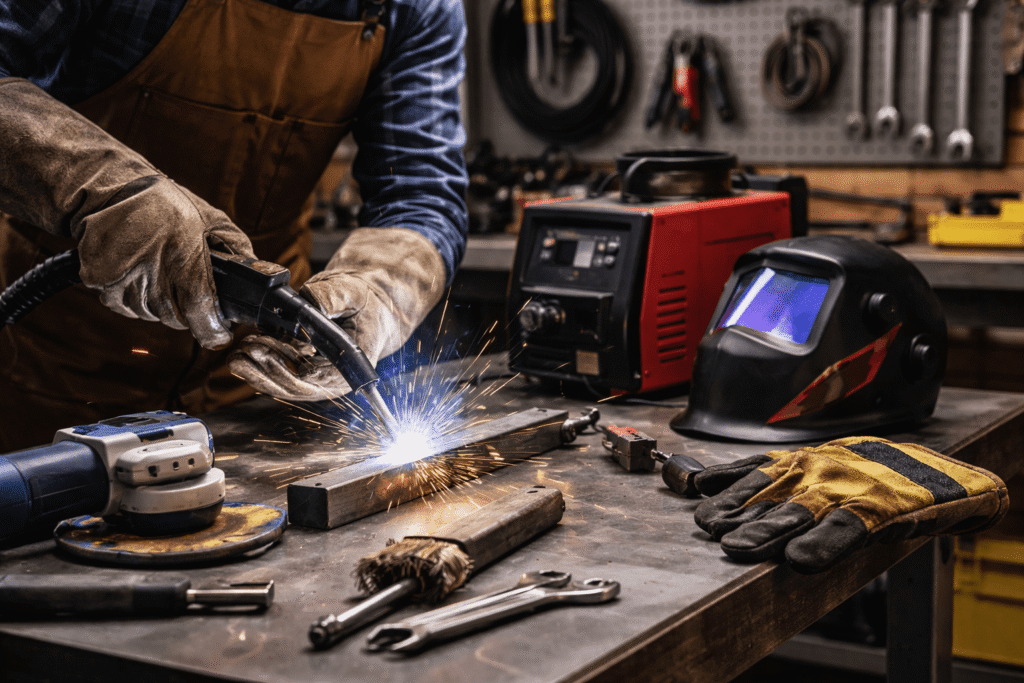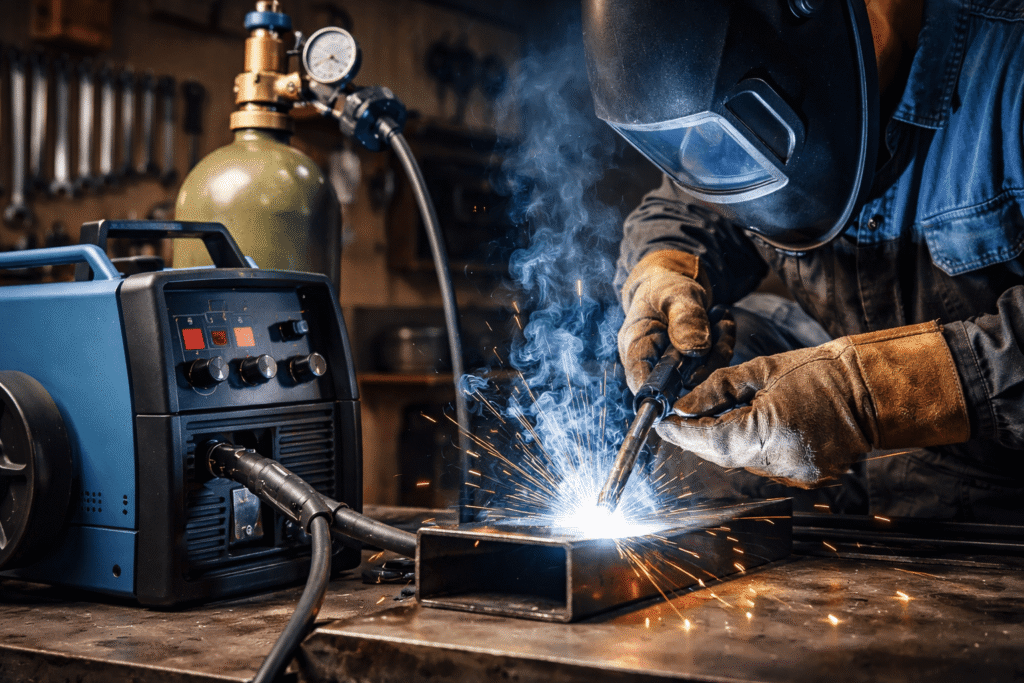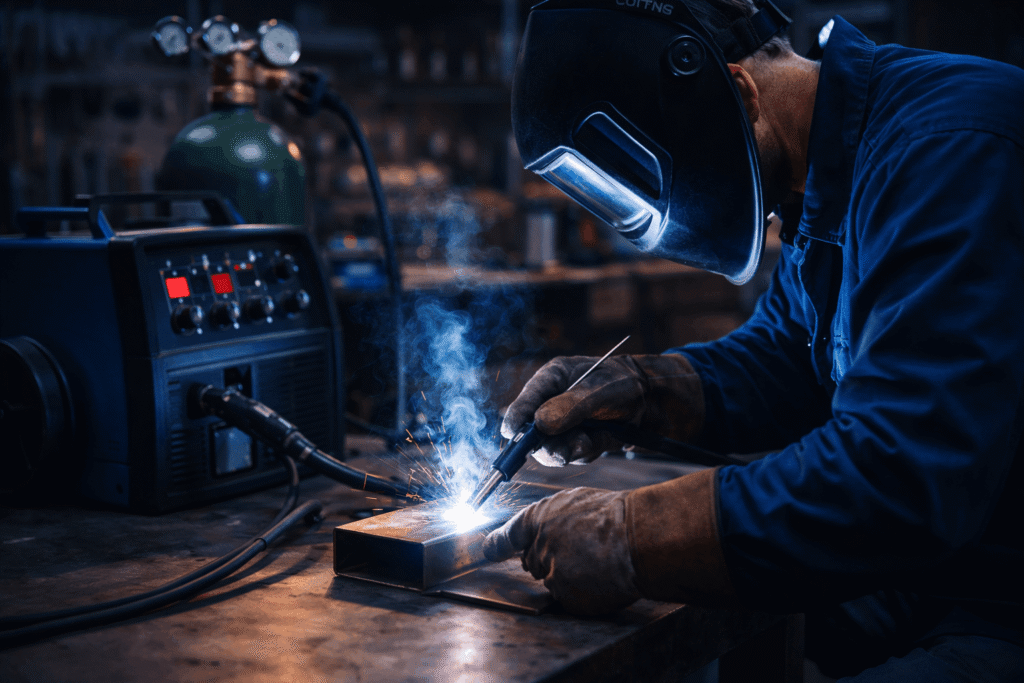
Welding can be done safely at home, even as a beginner, if you follow the right habits from day one. This guide explains the real risks, the safety gear you actually need, and the common mistakes that cause most beginner injuries.
Everything here is based on hands-on garage experience, not theory or hype.
If you are new to welding and want clear, practical advice that makes sense without overthinking it, you are in the right place.
Key Takeaways:
- Most welding injuries come from skipped basics, rushed setup, or poor ventilation, not from the welder itself.
- Proper safety gear and a clean, fire-safe workspace prevent the majority of beginner accidents.
- Heat, arc light, and fumes are predictable hazards when you respect them and follow consistent routines.
- Building safe habits early makes home welding controlled, confident, and easier to learn long-term.
Why Welding Safety Matters for Beginners
Most welding injuries do not happen because the machine failed or the process itself is unsafe. They happen when beginners skip basic steps, rush setup, or underestimate heat, arc light, and fumes. I have seen this often in home garages.
When you are new, your instincts are not built yet. You may not realize how quickly metal heats up, how intense the arc really is, or how fast fumes can build in a closed space. This is why safety matters most early on, because habits form fast.
According to the NFPA, around 500,000 welding-related accidents happen each year, commonly involving burns, eye damage, electrical shock, and crushed fingers. Most of these injuries are preventable with consistent, basic safety practices.
If you build safe routines now, welding becomes predictable and controlled. Safety is not about fear. It is about staying consistent so you can keep learning without setbacks.
What Makes Welding Dangerous if You Are New
Welding combines heat, electricity, bright light, and molten metal in a small space. Each one is manageable on its own. Together, they demand attention and preparation.
Here are the main risks beginners run into most often.
- Extreme heat that can burn skin instantly, even from small sparks or hot metal you think has cooled.
- Arc light that can damage your eyes and skin faster than you expect, even during short welds.
- Sparks and spatter that can ignite rags, sawdust, cardboard, or clothing in a home garage.
- Fumes that build up quietly and irritate lungs or cause headaches when ventilation is poor.
- Electrical shock risks from poor grounding, damaged cables, or rushed connections.
None of these are rare problems. They are normal welding hazards that become dangerous only when ignored.
Essential Welding Safety Gear You Must Use
You do not need expensive gear to be safe, but you do need the right gear used correctly every time. Skipping one item because a weld is quick is how most beginners get hurt.
Welding Helmet and Eye Protection
Your helmet protects your eyes from arc flash and your face from sparks. Both matter equally.
Auto-darkening helmets are easier for beginners because you can see your work before striking the arc. This helps with positioning and reduces awkward starts. Fixed shade helmets work fine too, but they require more coordination and experience.
Regular sunglasses are not enough. They do not block the specific light wavelengths produced by welding arcs. Even a few seconds of exposure can cause eye pain hours later. A proper welding helmet is not optional.
Gloves, Clothing, and Footwear
Your hands and body are closest to the weld. Protection here prevents most minor injuries.
Leather welding gloves protect against heat, sparks, and sharp edges. Thin work gloves do not last and can fail quickly under heat.
Wear cotton or leather clothing. These materials resist sparks and heat better. Synthetic fabrics can melt into your skin when hit by spatter, which makes burns much worse.
Common beginner mistakes include welding in short sleeves, wearing sneakers with mesh tops, or using thin gloves to feel more control. Comfort is important, but protection always comes first.
Respiratory and Ventilation Safety
Welding fumes are easy to ignore because you often cannot see them clearly.
A respirator is needed when welding indoors without strong airflow, when working with flux core, or when welding coated or dirty metal. If your eyes sting or your throat feels irritated, ventilation is already not enough.
Good garage airflow does not need to be complicated. Open doors, use a fan to pull air away from your face, and avoid welding in tight corners. The goal is to move fumes away from your breathing zone, not just around the room.
Simple airflow habits make a big difference over time, especially if you weld often.
Setting Up a Safe Home Welding Space
A safe welding setup does not need a large shop, but it does need intention. Most home garage accidents happen because the space was never prepared for heat, sparks, and movement.
Before you strike an arc, take a few minutes to look around your work area. Welding sparks travel farther than most beginners expect, and hot metal can stay dangerous long after the weld looks finished.
- Keep a clear distance from flammable items like cardboard, rags, fuel cans, sawdust, and paint. If it can burn, move it.
- Use a fire-resistant work surface such as steel, thick metal plates, or a proper welding table. Avoid wood benches unless they are fully protected.
- Manage cables so they do not loop under your feet or across walkways. Loose leads are one of the most common trip hazards in small garages.
- Make sure your workspace is well-lit. Good lighting helps you see joint alignment, spatter, and hot metal clearly, which reduces mistakes and accidents.
A clean, open space gives you room to focus on the weld instead of worrying about what might catch fire behind you.
Welding Machine Safety Basics
Your welder is safe when it is set up correctly and used within its limits. Most machine-related injuries come from rushed connections or improper power setups, not the welder itself.
Taking a few extra seconds to check your machine before welding prevents electrical issues and improves weld quality at the same time.
- Place the ground clamp directly on clean, bare metal close to the weld. Poor grounding causes unstable arcs and increases shock risk.
- Check correct polarity for your welding process and wire type. Running the wrong polarity can overheat cables and create erratic welds.
- Plug your welder into a proper outlet that matches its power requirements. Avoid overloaded circuits and weak extension cords.
- Do not use cheap adapters or questionable power converters. These can overheat, melt, or fail under welding loads and create serious fire risks.
If the machine sounds strained or the power feels unstable, stop and fix the setup before continuing.
Common Beginner Welding Mistakes That Cause Injuries
Most beginner injuries come from habits, not bad luck.
- Rushing setup: Skipping safety checks, leaving flammable items nearby, or welding without proper ventilation.
- Welding without full protection: Removing gloves for quick tacks or lifting the helmet too early.
- Underestimating hot metal: Touching freshly welded parts or moving material without tools.
- Poor cable awareness: Stepping on leads, tripping, or pulling the welder unexpectedly.
- Welding while tired or distracted: Fatigue slows reaction time and increases mistakes fast.
Avoiding these mistakes is less about skill and more about slowing down and staying consistent every time you weld.
Fire Prevention and Emergency Readiness
Fire risk is part of welding, especially in a home garage where materials are closer together. Sparks can travel several feet and stay hot long enough to ignite items you forgot were nearby. Planning for this before you weld is far safer than reacting after something catches.
Always keep a fire extinguisher within reach and know how to use it. Give hot metal time to cool before setting it down or walking away. A few extra minutes of patience can prevent hours of damage.
Fume Safety and Long-Term Health
Welding fumes are not just a short-term irritation. Over time, repeated exposure can affect your lungs and overall health, even if you weld only at home.
Beginners often underestimate fumes because the effects are not immediate. Headaches, throat irritation, or feeling unusually tired after welding are common signs that ventilation is not adequate.
Good airflow habits protect you long term. Move fumes away from your face, weld in open spaces when possible, and use a respirator when airflow cannot be improved. Long term safety is built from small, consistent choices.
Safe Practices for Different Welding Types
Each welding process has its own safety concerns. Understanding these helps you avoid problems before they start.
MIG Welding Safety Notes
MIG welding is beginner-friendly, but it still requires attention.
- Wire feed risks include sharp wire ends and unexpected feeding if the trigger is pressed accidentally.
- Spatter control matters because flying metal can burn skin or ignite nearby items.
Stick Welding Safety Notes
Stick welding produces more debris and heat.
- Slag hazards include hot fragments that can fall or pop off after the weld.
- Rod handling matters because used rods stay hot longer than expected.
TIG Welding Safety Notes
TIG welding demands focus and control.
- Arc intensity is very strong and can cause eye strain quickly without proper helmet settings.
- Tungsten handling is important because sharp or contaminated tips can cause arc instability.
Flux Core Welding Safety Notes
Flux core welding creates more smoke than MIG.
- Smoke and visibility issues make ventilation critical.
- Poor visibility increases the chance of bad welds and accidental contact with hot metal.
Safety Checks Before Every Weld
A quick safety check before every weld helps catch problems early and keeps small mistakes from turning into injuries. This only takes a minute, but it makes a real difference over time.
Before you strike an arc, pause and run through this checklist to make sure everything is set up safely.
- Helmet set to the correct shade and working properly.
- Gloves, clothing, and footwear fully covering skin.
- Welding area clear of flammable materials.
- Fire extinguisher nearby and easy to reach.
- Ground clamp attached to clean, bare metal.
- Cables and leads laid out safely with no trip hazards.
- Correct polarity and settings checked on the machine.
- Power outlet and extension cords in good condition.
- Ventilation set up to move fumes away from your face.
- Workpiece secure and tools within reach.
Doing this every session builds habits that protect you long before skill takes over.
When You Should Not Weld
There are times when welding should wait.
- Fatigue and distraction reduce awareness and reaction time.
- Poor ventilation days make fume exposure worse, especially in closed spaces.
- Unsafe weather or power conditions increase electrical and fire risks.
Walking away is sometimes the safest decision you can make as a beginner.
Final Words
Welding is not dangerous when it is done with care, patience, and the right habits. Most beginner injuries come from rushing, skipping protection, or underestimating heat, light, and fumes, not from welding itself.
If you focus on proper gear, a clean setup, good ventilation, and consistent safety checks, welding at home can be controlled, predictable, and rewarding as your skills grow.
FAQs
Is welding safe for beginners at home?
Yes, welding can be safe at home if beginners follow basic safety rules, use proper protective gear, and set up their space correctly. Most problems happen when safety steps are skipped or rushed.
What is the most common welding injury?
Minor burns and eye irritation are the most common welding injuries for beginners. These usually happen from touching hot metal too soon or welding without proper eye protection.
Do I need a respirator for welding in a garage?
A respirator is recommended if ventilation is limited or if you are welding with flux core or coated metals. If fumes linger or cause throat or eye irritation, airflow alone is not enough.
What should beginners never wear while welding?
Beginners should never wear synthetic fabrics, open shoes, or short sleeves while welding. These materials can melt or expose skin to sparks and hot metal.
Is MIG welding safer than stick welding?
MIG welding is generally easier for beginners because it produces less spatter and slag. However, both can be safe if proper gear, ventilation, and technique are used.
How hot does welded metal stay after finishing?
Welded metal can stay hot for several minutes and sometimes much longer depending on thickness. Always assume metal is hot and handle it with tools, not bare hands.

Mark Reynolds is the founder and senior editor of ToolCruiser, with over fifteen years of hands on experience working in real home garage workshops. His background includes home repairs, woodworking, garage builds, and small scale metal fabrication. Mark oversees all core content and product testing, focusing on real world performance, safety, power requirements, and long term value for homeowners using standard tools and setups.