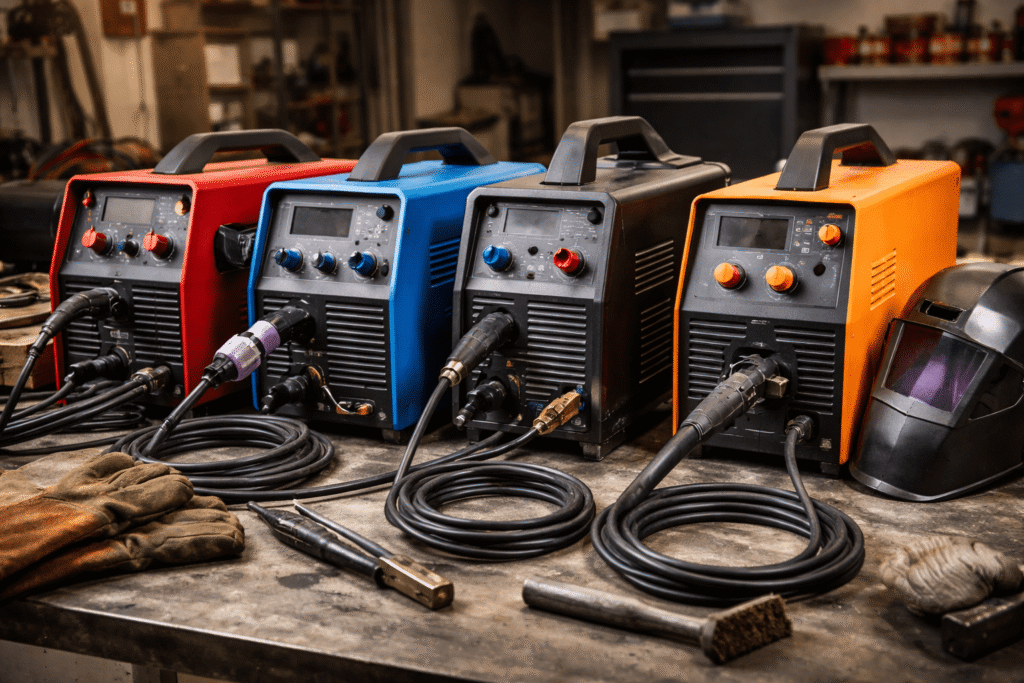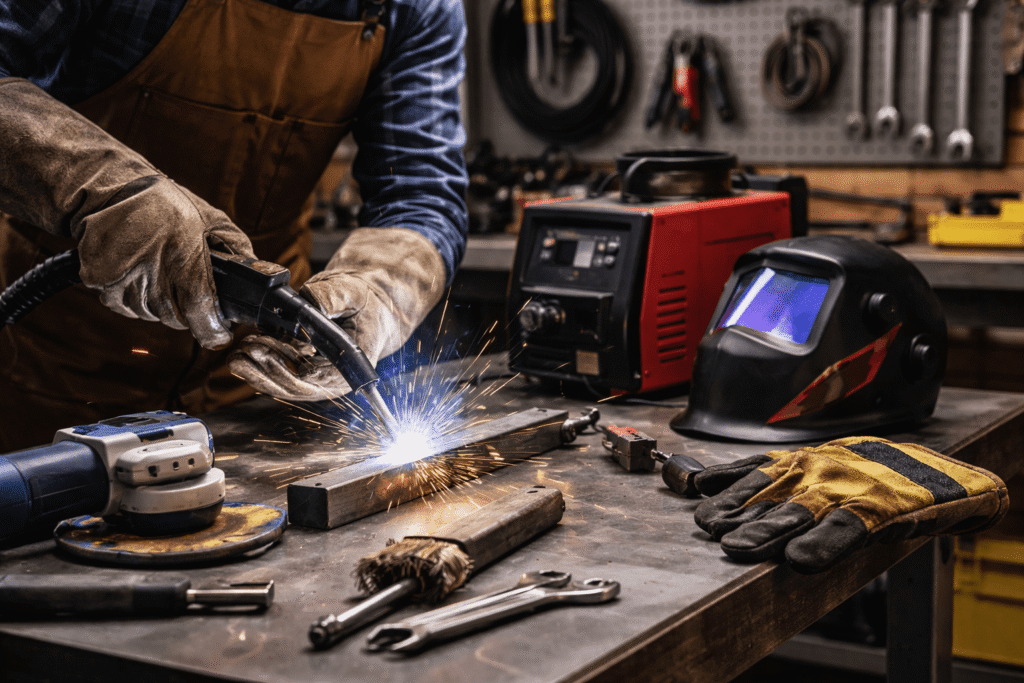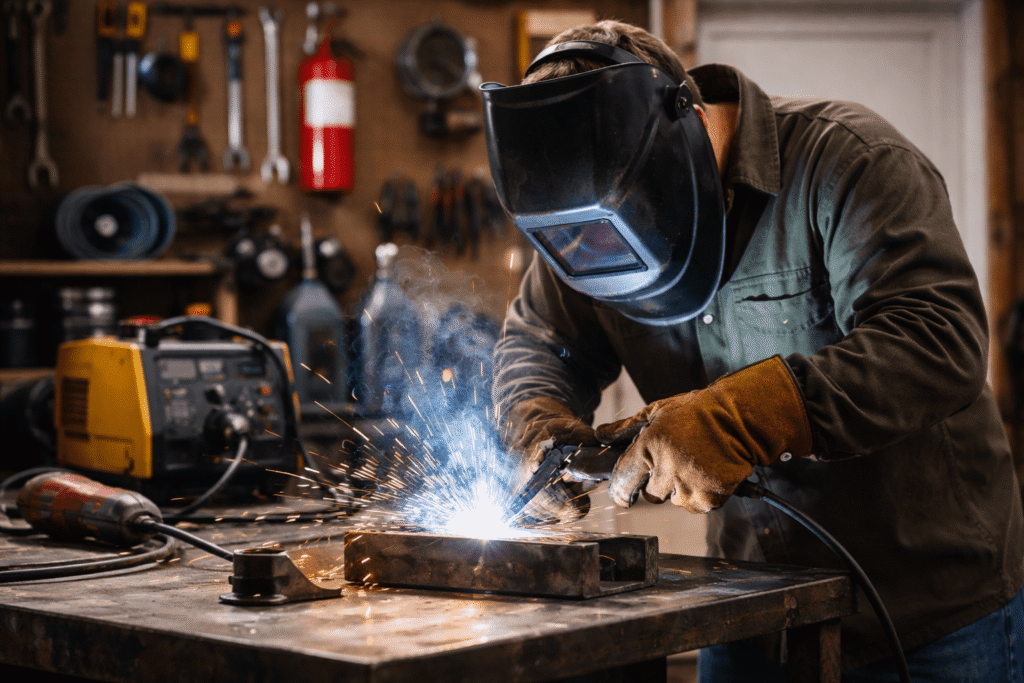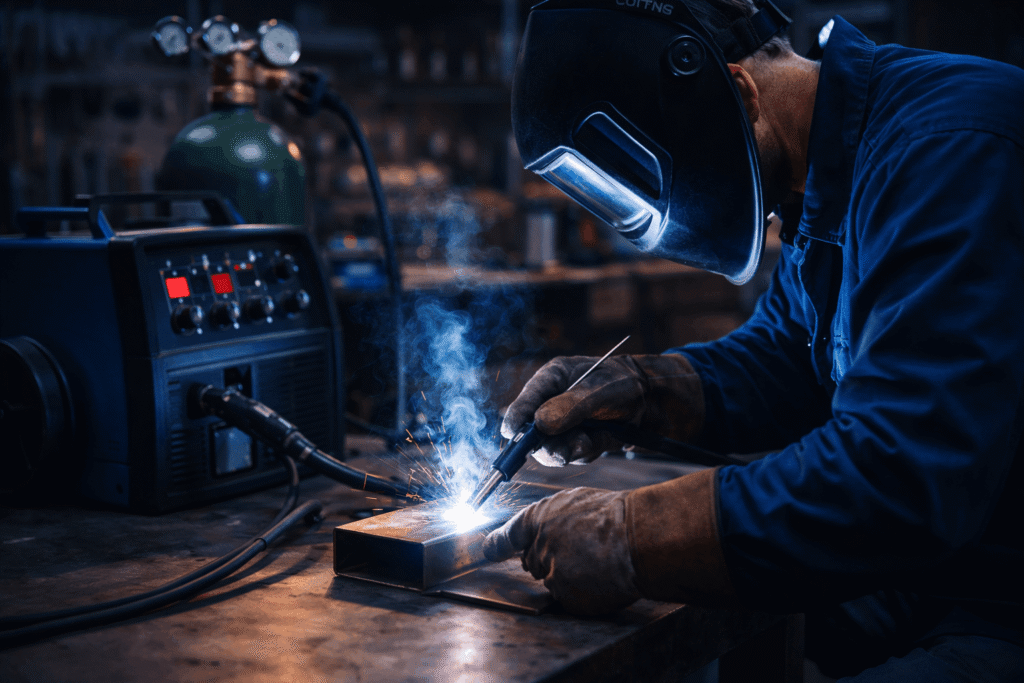
A MIG welder is a machine that lets you join metal by feeding a wire through a gun while an electric arc melts the metal together. In simple terms, you pull the trigger, the wire feeds automatically, and the weld forms as you move along the joint.
I have used MIG welders for years in a home garage setting, and this is the reason they are so popular. They remove a lot of the coordination problems beginners struggle with. You are not juggling a rod and arc length at the same time.
Once the machine is set correctly, you can focus on your hand movement and the weld puddle, which makes learning much less frustrating.
This guide explains what a MIG welder actually is, how it works in real use, and what the main parts do so you know what matters and what does not.
What Is a MIG Welder?
A MIG welder is a type of arc welding machine that uses a continuously fed wire and shielding gas to join metal. The wire acts as both the electrode and the filler material, which is why MIG welding is fast and easy to learn compared to other methods.
MIG stands for Metal Inert Gas, though it is also known as Gas Metal Arc Welding. In real-world use, what matters is that the machine feeds wire automatically while you weld. When you pull the trigger, the arc forms, the wire melts, and the gas shields the weld from air contamination.
From hands-on experience, this setup is forgiving. If your hand speed is not perfect, the wire keeps feeding.
That is why MIG welders are commonly used in home garages, automotive repair, fabrication shops, and production work.
In fact, MIG welding is estimated to account for roughly 50% of all welding jobs in many industrial shops worldwide, largely because speed and consistency matter more than extreme precision in these settings.
How Does a MIG Welder Work?
A MIG welder works by creating an electric arc between a continuously fed wire and the metal being welded, melting both together, while shielding gas protects the weld from the air.
Here is how the process works step by step in real use:
- You clamp the ground lead to clean bare metal on the workpiece to complete the electrical circuit
- A spool of wire feeds through the machine and into the welding gun
- When you pull the trigger, electricity flows through the wire and creates an arc at the tip
- The arc heat melts the wire and the base metal, forming a weld puddle
- Shielding gas flows around the arc to protect the molten metal from oxygen and moisture
- You move the gun steadily along the joint while the machine feeds wire automatically
What beginners often miss is this. The machine does most of the work, but setup matters. If the wire speed or voltage is wrong, the weld will still happen, but it will sound harsh, splatter more, or lack penetration. When dialed in correctly, MIG welding feels smooth and controlled.
Main Parts of a MIG Welder
A MIG welder looks complex at first, but it is made up of a few key parts that all serve a clear purpose.
Power Source
The power source supplies the electricity that creates the welding arc. In real use, this is what determines how hot the weld is. Too much power burns through thin metal. Too little power leads to weak welds that sit on top instead of bonding properly.
Wire Feed System
The wire feed system pushes the welding wire from the spool through the gun. A steady feed is critical. If the wire feed is inconsistent, the arc becomes unstable, which is one of the most common causes of poor weld quality for beginners.
Welding Gun and Contact Tip
The gun is what you hold, and the contact tip transfers electricity to the wire. In practice, worn or dirty contact tips cause more problems than people expect. When the tip wears out, wire feeding becomes erratic, and weld quality drops fast.
Shielding Gas and Regulator
The shielding gas protects the molten weld from air contamination. Without proper gas flow, welds become porous and weak. From experience, even a slight breeze in a garage with the door open can affect gas coverage, which is why indoor MIG welding works best.
Ground Clamp
The ground clamp completes the electrical circuit. This sounds simple, but it matters a lot. A poor ground connection causes inconsistent arcs, popping sounds, and frustration. Clean metal contact is essential for stable welding.
What Metals Can You Weld With a MIG Welder?
A MIG welder works with a wide range of metals, which is one of the main reasons it is so common in home garages and shops. That said, some materials are easier than others, and a few require extra setup.
- Mild steel: This is what MIG welding does best. Mild steel is forgiving, affordable, and easy to dial in. Most beginner projects, like brackets, frames, and repairs, are done on mild steel, and it responds well even if your technique is not perfect yet.
- Stainless steel: MIG can weld stainless steel successfully, but cleanliness matters much more. Any oil, dirt, or grinding dust can contaminate the weld. From experience, stainless also shows heat marks easily, so slower travel speed and proper settings make a big difference.
- Aluminum: Aluminum can be MIG-welded, but it is not beginner-friendly without the right setup. You usually need a spool gun or push-pull system, different wire, and pure argon gas. Without this, feeding issues and messy welds are common.
- Thin sheet metal vs thicker steel: Thin sheet metal is possible with MIG, but it takes careful heat control to avoid burn-through. Thicker steel is often easier because it absorbs heat better, allowing for deeper penetration and stronger welds without rushing.
Common Uses of MIG Welding
MIG welding is popular because it balances speed, strength, and ease of use. You will see it used in many everyday applications.
Automotive Repair and Body Work
MIG welding is widely used for frame repairs, brackets, exhaust work, and general automotive fabrication. Body panels require more finesse, but for structural and repair work, MIG is often the first choice.
Home Garage Projects
This is where MIG welders shine for hobbyists. Projects like shelves, trailers, gates, carts, and tool stands are all well-suited to MIG welding. The automatic wire feed makes it practical for weekend work without constant re learning.
Fabrication and Metal Frames
Fabrication shops use MIG for building frames, railings, racks, and supports. The process allows for consistent welds across long joints, which keeps production moving without sacrificing strength.
Manufacturing and Production Work
In manufacturing, MIG welding is used for repetitive welds where speed and consistency matter. Once the settings are dialed in, operators can produce strong welds quickly with minimal downtime.
Is MIG Welding Easy for Beginners?
MIG welding is one of the easiest welding methods to learn, which is why it is often recommended for beginners. The machine handles wire feeding automatically, so you can focus on your hand movement and positioning instead of managing multiple variables at once.
That said, MIG welding is not an automatic success. Most beginner problems come from setup, not hand skill. Common mistakes include incorrect voltage or wire speed, poor metal preparation, weak ground connections, and rushing the weld. When these basics are ignored, welds may look acceptable but lack strength.
From real use, once a beginner learns to clean the metal, set the machine properly, and move at a steady pace, MIG welding becomes predictable, and confidence builds quickly.
MIG Welding Pros and Cons
MIG welding is popular because it works well for many real-world jobs, but it is not perfect. Understanding both sides helps you decide if it is the right tool for your garage or shop.
Advantages of MIG Welding
- Easy to learn: From real experience, MIG is forgiving. The automatic wire feed removes one of the hardest parts of welding for beginners. You can focus on steady movement and watching the weld puddle instead of fighting the arc.
- Fast welding speed: MIG welding is quick. Once the settings are dialed in, you can lay down long, consistent welds without stopping. This matters for projects like frames, trailers, and repairs, where time adds up.
- Clean welds with little slag: MIG produces clean welds compared to stick welding. There is no heavy slag to chip off, which means less cleanup and better visibility while welding.
- Works well on many metals: Mild steel, stainless steel, and even aluminum can be welded with MIG if the setup is right. This versatility makes one machine useful for many different projects.
Disadvantages of MIG Welding
- Equipment costs more upfront: A decent MIG welder, gas bottle, regulator, and consumables cost more than basic stick welding gear. For beginners on a tight budget, this can be a hurdle.
- Not ideal outdoors without protection: MIG welding relies on shielding gas. Even light wind can blow the gas away and ruin weld quality. From experience, this makes MIG frustrating outdoors unless you block the wind well.
- Less precise than TIG for thin work: MIG can weld thin metal, but it is harder to control heat compared to TIG. For very thin sheet metal or cosmetic welds, TIG usually produces better results.
- Requires clean metal: Rust, paint, oil, and dirt cause problems fast. MIG welding demands proper prep. Skipping this step leads to weak, ugly welds, even if the machine settings are correct.
MIG Welder vs Stick vs TIG (Quick Comparison)
MIG welding is usually the easiest and fastest option for general work, while stick welding is tougher but more forgiving outdoors, and TIG offers the most control and cleanest results for precision work.
| Welding Type | Best For | Ease of Learning | Speed | Outdoor Use | Precision |
|---|---|---|---|---|---|
| MIG | Home projects, fabrication, automotive work | Easy | Fast | Poor without wind protection | Moderate |
| Stick | Outdoor repairs, thick steel, rough conditions | Moderate | Medium | Very good | Low |
| TIG | Thin metal, aluminum, clean and precise welds | Hard | Slow | Poor | High |
What to Look for in a MIG Welder
Choosing the right MIG welder matters more than most beginners realize. The right machine makes learning smoother and prevents a lot of frustration.
- Voltage and amperage range: Make sure the welder can handle both thin and thicker steel. Machines with adjustable voltage give better control as your skills improve.
- Gas and flux core capability: A machine that supports both gas MIG and flux core wire adds flexibility. Flux core is useful for outdoor work when gas shielding is difficult.
- Power input, 120V vs 240V: For light home use, 120V works fine. For thicker steel or future growth, a dual voltage machine offers more headroom without replacing the welder later.
- Wire size compatibility: Being able to run common wire sizes like 0.030 and 0.035 inches makes it easier to match wire to material thickness.
- Duty cycle: Duty cycle tells you how long the welder can run before overheating. Higher duty cycle matters for longer projects and reduces forced downtime.
Bottom Line
A MIG welder is one of the most practical tools you can have for metal work at home or in a small shop. It is easy to learn, fast to use, and capable of producing strong, clean welds on a wide range of projects when it is set up correctly.
From real-world use, the key to good results is not just the machine, but clean metal, proper settings, and taking the time to do the basics right.
FAQs
What does MIG stand for in welding?
MIG stands for Metal Inert Gas. It refers to the shielding gas used to protect the weld from air while a continuously fed wire creates the weld.
Is MIG welding stronger than stick welding?
Both can produce strong welds when done correctly. MIG welding offers more consistency and cleaner results, while stick welding can be more forgiving on dirty or outdoor jobs.
Can a MIG welder weld aluminum?
Yes, a MIG welder can weld aluminum, but it requires the right setup. Most jobs need a spool gun or push-pull system, aluminum wire, and pure argon gas to get clean results.
Do you need gas for MIG welding?
Traditional MIG welding uses shielding gas, but some machines can run flux core wire without gas. Gas MIG produces cleaner welds, while flux core works better outdoors.
Is MIG welding good for home use?
Yes, MIG welding is one of the best options for home use. It is easy to learn, versatile, and well-suited for garage projects, repairs, and light fabrication.
What is the difference between MIG and flux core welding?
MIG welding uses shielding gas to protect the weld, while flux core wire has flux inside the wire itself. Flux core is better outdoors, but MIG welding is cleaner and easier to control indoors.

Mark Reynolds is the founder and senior editor of ToolCruiser, with over fifteen years of hands on experience working in real home garage workshops. His background includes home repairs, woodworking, garage builds, and small scale metal fabrication. Mark oversees all core content and product testing, focusing on real world performance, safety, power requirements, and long term value for homeowners using standard tools and setups.