If you are looking to learn welding at home, the good news is this. Welding for beginners is more approachable today than it has ever been.
With basic tools, the right safety setup, and some patience, you can start welding in a home garage without years of training or a huge budget.
This guide is written for everyday people who want to learn welding safely and correctly. I am writing this from real garage experience, not theory.
The goal is to help you understand what welding is, which type makes sense for beginners, and what actually works in real home use.
What Is Welding?
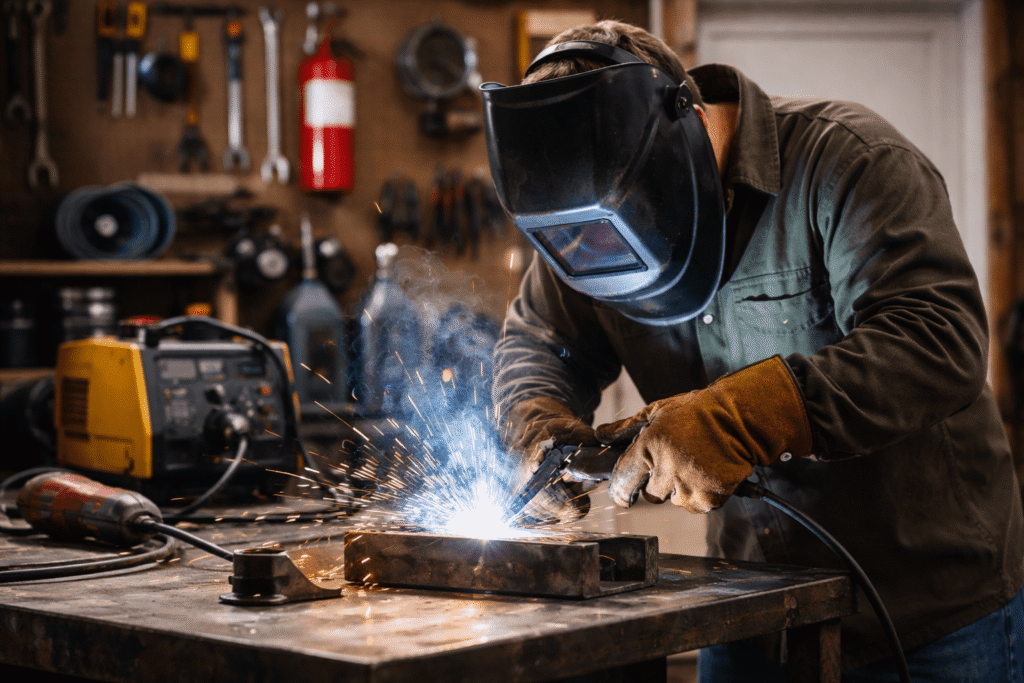
Welding is the process of joining two pieces of metal together using heat and often a filler material to create a strong, permanent bond. In simple terms, you melt the metal at the joint, let it flow together, and allow it to cool into one solid piece.
At home, welding is usually done with electric welding machines that create a controlled arc of heat. That heat melts the metal edges and, in most cases, a filler wire that helps form a strong joint. Once cooled, the pieces are fused together.
Common ways beginners use welding at home include:
- Small metal repairs around the house
- DIY projects like brackets, frames, or racks
- Garage builds, such as workbenches or carts
- Learning a hands-on skill as a hobby
Welding is not just for professionals or job sites. With the right approach, it becomes a practical home skill that grows with experience.
Is Welding at Home Safe for Beginners?
Yes, welding at home can be safe for beginners if it is done with proper safety gear, setup, and realistic expectations.
A clinical review highlights that welding-related injuries are far more commonly linked to inadequate eye protection, ventilation issues, and unsafe setup practices than to equipment defects.
Most accidents happen when people rush, skip protection, or work beyond their skill level.
Welding involves heat, electricity, bright light, and sparks, so it demands respect. The good part is that basic safety steps make a huge difference.
Proper protective gear, good ventilation, and a clean workspace reduce risk significantly. Beginners who focus on safety first tend to learn faster and avoid injuries.
Types of Welding Explained for Beginners
There are several types of welding, but beginners do not need to learn them all at once. Below are the most common methods you will see when learning welding for beginners, with clear use cases for homework.
MIG Welding for Beginners
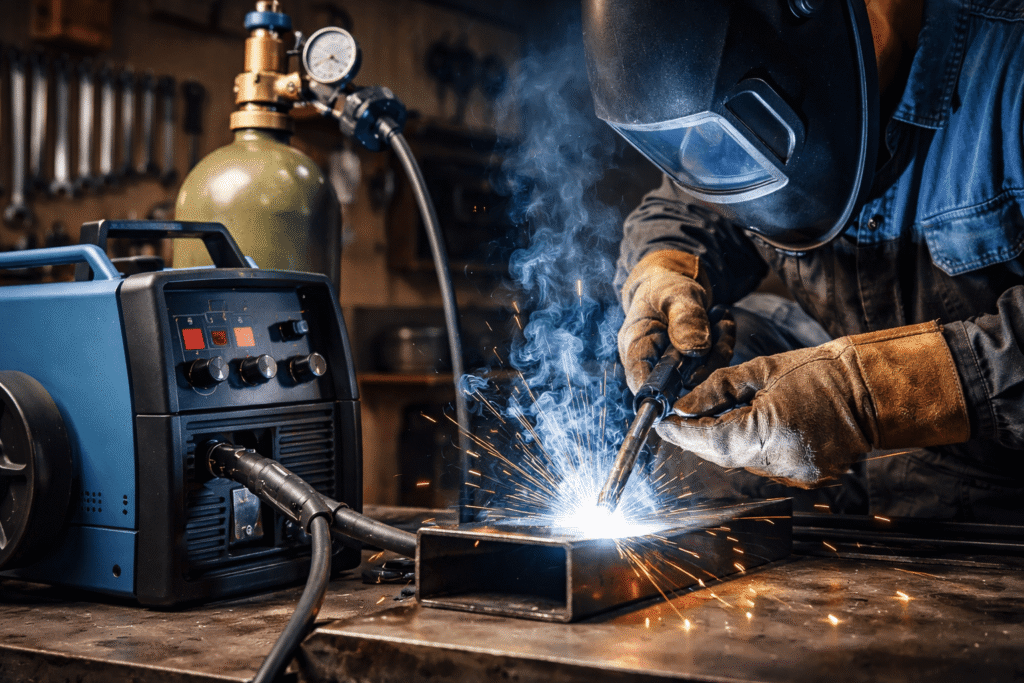
MIG welding is often the easiest place to start. It uses a continuously fed wire and a trigger-style welding gun, which makes it feel more controlled and predictable for new users.
MIG welding works well for:
- Indoor garage welding
- Thin to medium steel
- Clean, neat-looking welds
- Beginners learning basic technique
Because the wire feeds automatically, you can focus more on hand movement and less on managing the arc. In my experience, MIG welding builds confidence faster for beginners.
Flux Core Welding for Beginners
Flux core welding is similar to MIG but does not require shielding gas. The wire contains flux that protects the weld as it burns.
Flux core welding is commonly used for:
- Outdoor welding where wind is present
- Beginner setups without gas bottles
- Thicker steel and rougher materials
- Simple repairs and structural work
The welds are not as clean as MIG, but flux core is forgiving and practical for home use, especially outside the garage.
Stick Welding for Beginners
Stick welding uses a consumable electrode that you manually feed as it burns. It is strong and versatile, but it has a steeper learning curve.
Stick welding is best suited for:
- Thicker steel
- Outdoor work
- Dirty or rusty metal
- Structural repairs
For beginners, stick welding takes more practice. Learning to maintain a steady arc can be frustrating early on, but it becomes a valuable skill over time.
TIG Welding and Why It Is Not Ideal for Beginners
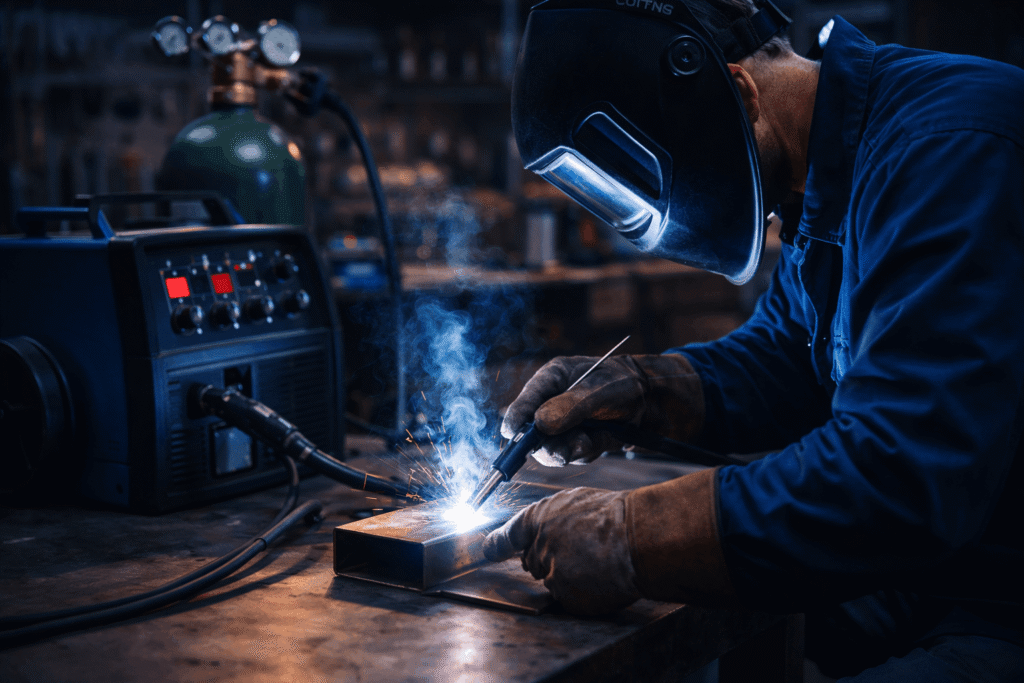
TIG welding offers the most precision, but it also requires the most coordination. You control heat with a foot pedal, manage a torch, and feed filler rod by hand.
TIG welding is better for:
- Thin metal
- Aluminum and specialty alloys
- Precision and cosmetic welds
For welding beginners, TIG is usually best learned later. It rewards experience and patience, but it can slow down early learning if you start here.
Best Type of Welding for Beginners at Home
For most beginners, MIG welding is the easiest and safest place to start at home, with flux core welding a close second. Both methods are forgiving, widely supported, and well-suited to typical home garage projects.
MIG welding is beginner-friendly because it is simple to control and produces clean welds with less frustration early on.
You pull the trigger, the wire feeds automatically, and you can focus on learning hand movement and consistency.
Flux core welding works in a similar way but does not require shielding gas, which makes it useful for outdoor work or simple setups. Stick welding and TIG welding are better learned later, once you have basic technique and confidence.
Starting simple matters. When beginners jump into more complex welding methods too early, learning slows down and mistakes increase. A simpler process lets you build muscle memory, understand heat control, and recognize good welds faster.
Quick decision guide:
- If you will weld indoors and want clean results, start with MIG welding.
- If you plan to weld outdoors or want a simpler setup, start with flux core welding.
- If you are working with thick, dirty steel only, stick welding can wait until later.
- If precision and appearance matter most, learn TIG after you master the basics.
What You Need to Start Welding at Home
You do not need a professional shop to begin welding at home. A realistic beginner setup focuses on safety, reliability, and tools you will actually use. Starting with the right basics makes learning smoother and prevents bad habits.
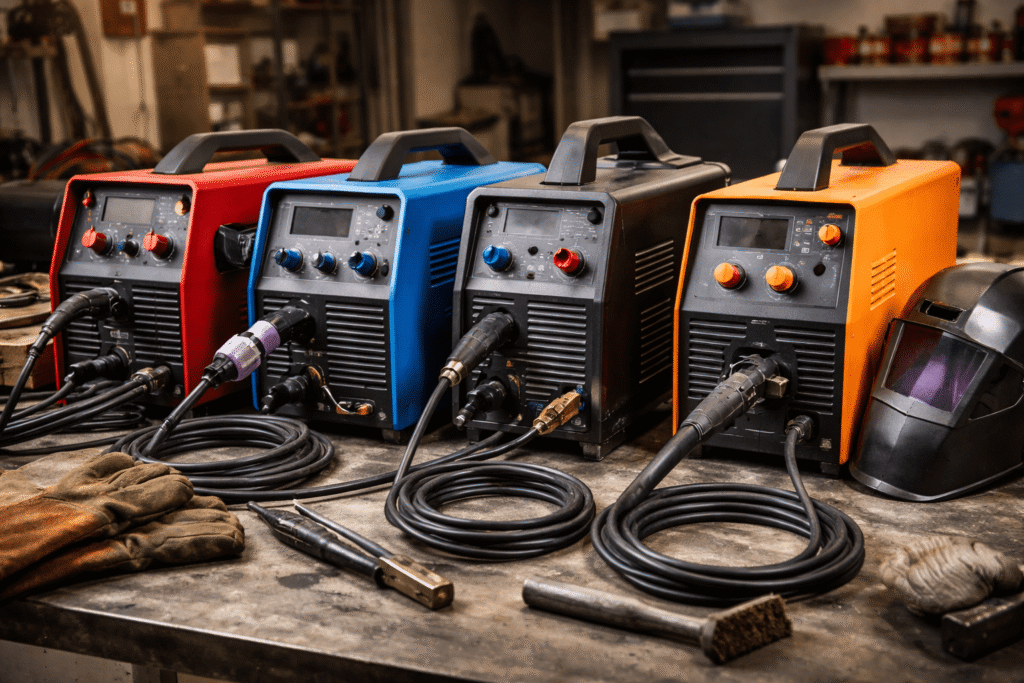
1. Choosing Your First Welding Machine
Your first welding machine should match a typical home garage setup. Most beginners use machines that run on standard household power, usually one hundred ten to one hundred twenty volts. This avoids the need for special wiring and keeps setup simple.
Very cheap welders often cause problems for beginners. Unstable arcs, poor controls, and inconsistent output make it harder to learn proper technique.
When the machine struggles, beginners often blame themselves, even when the equipment is the real issue.
Look for features that matter in real use:
- Stable arc and smooth wire feed
- Clear controls for voltage and wire speed
- Built-in thermal protection
- Readily available parts and support
A reliable machine helps you focus on learning, not fighting the tool.
2. Essential Welding Safety Gear
Safety gear is not optional. Welding produces intense light, heat, and sparks, and beginners need full protection from the start.
Key safety items include:
- An auto-darkening welding helmet to protect your eyes and face while allowing clear visibility
- Proper welding gloves that insulate from heat and cover past the wrist
- A welding jacket or long-sleeve shirt to protect arms and chest
- Heavy pants and closed-toe footwear to shield legs and feet
Cotton and leather matter because they burn rather than melt. Synthetic materials can melt into skin when exposed to sparks or heat, which causes serious injuries. In a home garage, natural materials are always the safer choice.
3. Basic Welding Tools You Will Actually Use
You do not need a long list of tools to get started. A few practical items cover most beginner needs.
Useful tools include:
- An angle grinder for cleaning metal and smoothing welds
- Clamps to hold pieces steady while welding
- A wire brush and chipping hammer for cleaning welds
- Magnets and pliers for positioning and handling hot metal
These tools save time and improve weld quality without adding complexity.
Setting Up a Safe Home Welding Workspace
A safe workspace is just as important as the welding machine itself. Many beginner mistakes happen before the arc is even struck.
Ventilation is critical. Welding fumes should never be trapped in a closed space. Open doors, use fans, or work near fresh airflow to reduce exposure. Fire safety matters as well. Remove flammable items, keep a fire extinguisher nearby, and never weld near fuel or chemicals.
Electrical safety starts with proper grounding. Always attach the ground clamp securely to clean metal. Poor grounding leads to unstable arcs and can damage equipment. Keep your work area clear so you can move freely without tripping over cables or tools.
Common beginner mistakes include welding too close to clutter, ignoring ventilation, and rushing setup. Taking a few minutes to prepare your space makes welding safer and easier to learn.
Basic Welding Techniques Every Beginner Should Learn
Welding skills are built through repetition and control, not perfection on day one. As a beginner, the goal is to learn how the arc behaves, how heat affects metal, and how your hands move together. Clean, pretty welds come later. Right now, consistency and safety matter more than appearance.
How to Strike and Maintain an Arc
Striking an arc means starting the heat that melts the metal. With MIG or flux core welding, this happens when you pull the trigger and bring the gun close to the metal. The arc forms in the small gap between the wire and the workpiece.
Maintaining the arc is about distance and movement. Keep the gun at a steady angle and hold a consistent gap as you move.
If you pull back too far, the arc breaks. If you get too close, the wire can stick or splatter. With practice, you learn to hear and see when the arc is stable.
Understanding Weld Beads
A weld bead is the line of melted metal left behind as you weld. A good weld bead is even, slightly raised, and consistent in width. It should look smooth rather than lumpy or scattered.
Consistency matters because it shows you are controlling heat and movement. Uneven beads often mean moving too fast, too slow, or using incorrect settings.
Early on, focus less on how the bead looks and more on keeping the same speed and angle from start to finish.
A common saying among experienced welders is, “Consistency beats appearance when you are learning. Strong welds come before pretty ones.”
Practicing on Scrap Metal First
Scrap metal is the best teacher for beginners. It removes pressure and lets you experiment without worrying about ruining a project.
Practicing on scrap helps you:
- Learn how different settings affect the weld
- Build muscle memory
- Understand heat control
- Gain confidence before real projects
Spending time on scrap metal speeds up learning more than jumping straight into finished work.
Common Welding Mistakes Beginners Make
Mistakes are part of learning, but understanding them early saves time and frustration.
Moving too fast is one of the most common issues. When you rush, the weld does not penetrate properly, and beads become weak or uneven.
Poor metal prep also causes problems. Rust, paint, and dirt interfere with the weld. Clean metal leads to stronger, more predictable results.
Wrong settings slow learning. Voltage and wire speed that are too high or too low make it hard to control the arc. Beginners should adjust settings gradually and observe the results.
Ignoring safety gear is a serious mistake. Even quick welds expose you to intense light and heat. Proper protection should always be worn.
Welding beyond your skill level too early leads to frustration and unsafe situations. Complex joints and critical repairs should wait until you have more experience.
What Can You Weld as a Beginner?
Beginners should focus on simple, forgiving projects that build confidence and skill. Mild steel is the easiest material to start with because it welds consistently and responds well to common beginner machines.
Good beginner projects include:
- Mild steel brackets and mounts
- Small household or garage repairs
- Simple frames and stands
- Racks, carts, and basic supports
Avoid early projects that involve thin aluminum, cast iron, pressure vessels, or structural components that carry heavy loads. These require advanced technique and experience to weld safely.
How Long Does It Take to Learn Welding?
The basics of welding can be learned quickly, often within a few weeks of regular practice. Learning to strike an arc, control movement, and make functional welds does not take years.
Skill improves over time. The more you practice, the better your control, consistency, and judgment become. Welding is a hands-on skill, and progress depends on patience and repetition.
Realistic expectations matter. Early welds will not look perfect, and that is normal. With steady practice and attention to safety, most beginners see noticeable improvement in a short period of time.
Learning Welding at Home vs Taking a Class
There is no single right way to learn welding. The best option depends on how you learn, your budget, and how hands-on you want the experience to be.
Self learning at home works well for many beginners. You move at your own pace, practice often, and learn directly on the machine you will actually use. This approach builds real-world confidence, especially for DIY and garage projects.
Online videos are a helpful support tool. They are great for seeing techniques, settings, and common mistakes, but they work best when paired with hands-on practice. Watching without welding rarely builds skill on its own.
Community classes offer structure and feedback. An instructor can correct bad habits early and explain safety in person.
Classes cost more and follow a schedule, but they can speed up learning for some people. Many beginners combine home practice with occasional classes or workshops.
Bottom Line
Welding for beginners works best when you keep things simple. Start with an easy welding method, use proper safety gear every time, and focus on learning basic control rather than perfect-looking welds.
Practice consistently, even in short sessions. Welding skill builds through repetition, not rushing. As your confidence grows, you can upgrade equipment, try new materials, and learn more advanced techniques.
With patience and the right setup, welding becomes a useful and rewarding home skill.
FAQs
Is welding hard to learn for beginners?
Welding is not hard to start, but it takes practice to improve. Most beginners can learn the basics quickly with the right equipment and safety habits. Skill grows steadily with hands-on experience.
What is the easiest welding method for beginners?
MIG welding is usually the easiest method for beginners. It is simple to control, produces clean welds, and works well for common home projects.
Can you weld at home with a regular outlet?
Yes, many beginner welding machines run on standard household outlets. This makes home garage welding practical without special electrical upgrades.
How much does it cost to start welding at home?
A basic beginner setup typically costs a few hundred dollars. This includes a welding machine, safety gear, and basic tools. Costs increase as skills and equipment needs grow.
What metals are easiest to weld for beginners?
Mild steel is the easiest metal for beginners to weld. It is forgiving, widely available, and works well with common welding methods.
Is MIG or flux core better for beginners?
MIG is better for clean indoor welding and easier learning. Flux core is better for outdoor work and simple setups. Both are beginner-friendly depending on your needs.

Mark Reynolds is the founder and senior editor of ToolCruiser, with over fifteen years of hands on experience working in real home garage workshops. His background includes home repairs, woodworking, garage builds, and small scale metal fabrication. Mark oversees all core content and product testing, focusing on real world performance, safety, power requirements, and long term value for homeowners using standard tools and setups.