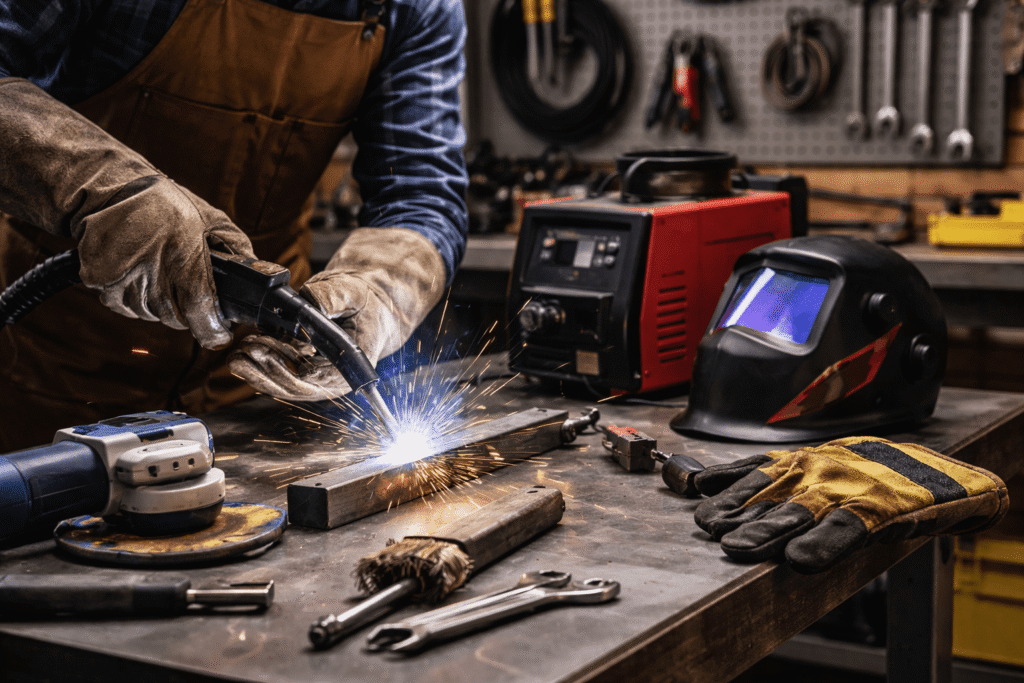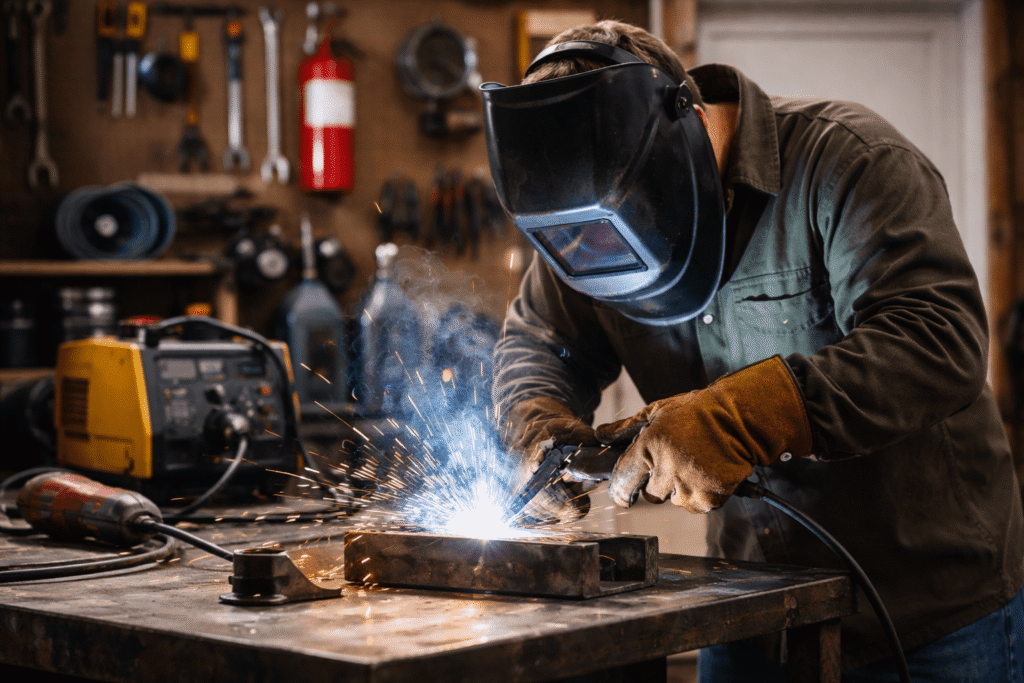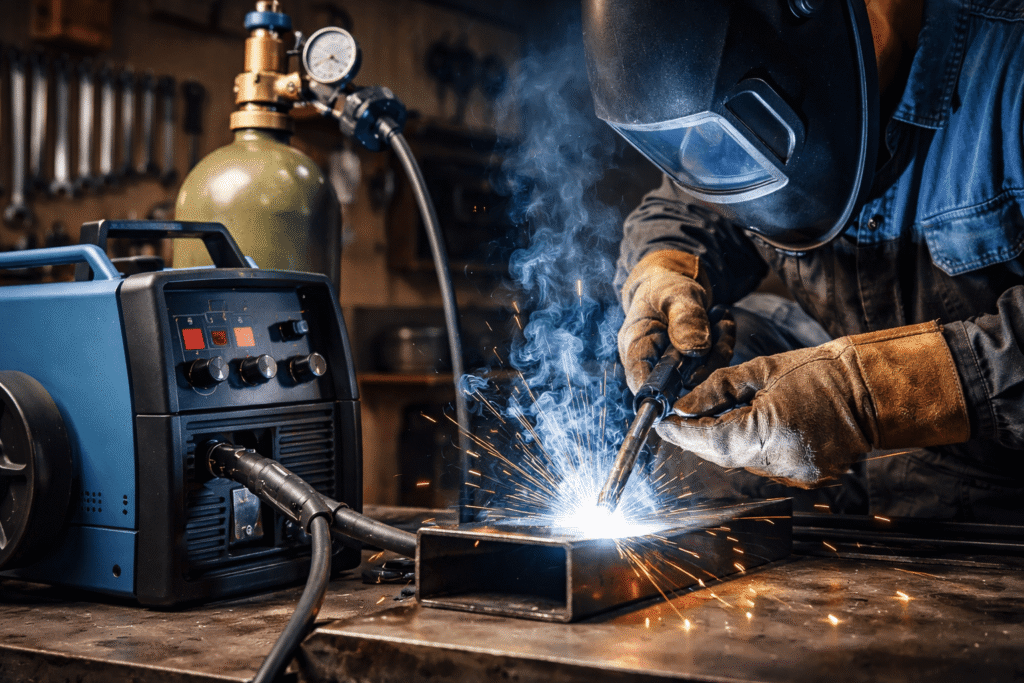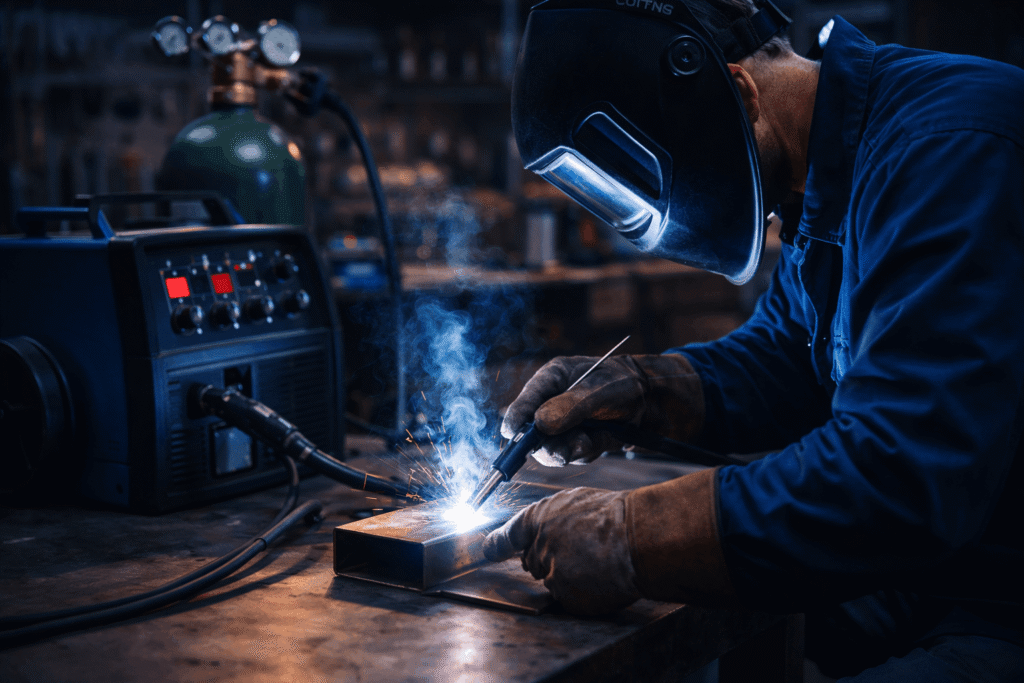
Welding machines power everything from small garage repairs to serious fabrication work. With more people taking on DIY projects at home and the welding industry facing growing demand, understanding the basics matters more than ever.
In the United States, the welding workforce stood at around 771,000 professionals in 2024, and more than 320,000 new welders are expected to be needed by 2029 due to retirements and increased demand.
For home users and beginners, choosing the right welding process is often the biggest challenge. The right setup makes welding safer, easier to learn, and far more enjoyable in real-world use.
Key Takeaways:
- MIG welding is the easiest to learn and the most practical choice for beginners and home garages.
- TIG welding offers the cleanest and most precise welds but requires patience, coordination, and practice.
- Stick welding works best for thick, dirty, or outdoor welding where conditions are not ideal.
- Flux Core welding delivers strong penetration and performs well outdoors without shielding gas, but creates more spatter and fumes.
What Is a Welding Machine and How Does It Work?
A welding machine is a tool that uses electricity to create enough heat to melt metal and fuse two pieces together. It does this by producing an electric arc or controlled heat source that melts the base metal and, in most cases, a filler material. As the metal cools, it forms a strong bond.
In simple terms, a welding machine controls how much power goes into the weld. That power control affects heat, penetration, and overall weld strength.
Different welding processes handle this in different ways, but the goal is always the same. Create a clean, solid joint that holds up under real use.
Most welding machines rely on three core elements working together.
- Electrical power from a wall outlet or generator
- A consumable or non-consumable electrode or wire
- Some form of shielding to protect the molten weld from air
When these elements are set up correctly, you get a weld that is strong, consistent, and suitable for everyday garage projects.
The Four Main Types of Welding Processes
When shopping for a welding machine, most people will come across four main welding processes. Each one has its own strengths, learning curve, and ideal use cases.
The best choice depends on what you plan to weld, where you will weld, and how much experience you have.
1. MIG Welding
MIG welding, often called wire feed welding, is one of the most popular options for home garages and small workshops.
I have used MIG welders for years on everything from brackets to trailer repairs, and there is a reason they are so common. They are easy to learn and very forgiving.
A MIG welder works by feeding a continuous wire electrode through a welding gun while shielding gas flows around the arc. When you pull the trigger, the wire melts into the joint and becomes the filler material.
The steady wire feed helps keep the arc stable, which makes MIG welding easier to control, especially for beginners.
Best Materials and Typical Uses:
- Mild steel and carbon steel
- Stainless steel with the correct wire and shielding gas
- Aluminum when paired with a spool gun or proper setup
- Automotive repairs and light fabrication
- Home projects like frames, mounts, brackets, and small structural builds
Pros of MIG Welding:
MIG welding is often the first process people learn, and for good reason.
- Easy to learn, even if you have never welded before
- Produces clean welds with very little slag to remove
- Faster welding speed compared to most other methods
- Good control on thin and medium thickness metal
- Machines, consumables, and replacement parts are easy to find
Cons of MIG Welding:
MIG welding works great in a garage, but it does have some limits you should know about.
- Shielding gas makes outdoor welding difficult in windy conditions
- Setup is more complex than Stick welding due to gas and wire feed
- Does not perform well on dirty, rusty, or painted metal
- Gas cylinders add cost and take up storage space
- Not ideal for very thick metal unless you use a higher-powered machine
2. TIG Welding
TIG welding is known for precision and clean, high-quality welds. It is the process I reach for when appearance matters or when working with thin or delicate materials. TIG welding takes more patience and practice, but the control it offers is unmatched.
A TIG welder works by using a non-consumable tungsten electrode to create the arc, while a separate filler rod is added by hand.
Shielding gas protects the weld area from contamination. Unlike MIG, there is no trigger-fed wire. You control the arc, filler, and often a foot pedal for heat, all at the same time.
Best Materials and Typical Uses:
- Stainless steel and aluminum
- Thin gauge steel
- Chromoly and specialty metals
- Motorcycle, automotive, and custom fabrication
- Precision work where clean weld appearance matters
Pros of TIG Welding:
TIG welding shines when control and weld quality are the priority.
- Produces very clean and precise welds
- Excellent control over heat and penetration
- Ideal for thin metals and delicate work
- Minimal spatter and cleanup
- Strong, professional-looking welds
Cons of TIG Welding
From real-world experience, TIG welding demands time and patience.
- Steep learning curve for beginners
- Slower welding speed than MIG or Flux Core
- Requires two-hand coordination and often foot control
- Equipment setup can be expensive
- Less practical for quick repairs or thick materials
3. Stick Welding
Stick welding is one of the oldest and toughest welding methods still in use today. I keep a Stick welder around because it works when conditions are far from perfect. Dirt, rust, wind, and outdoor environments are where Stick welding really earns its place.
Stick welders work by using a consumable electrode coated in flux. As the rod melts, the flux creates shielding gas and slag that protect the weld.
There is no wire feed or external gas tank, which keeps the setup simple and rugged.
Best Materials and Typical Uses:
- Thick steel and structural metal
- Outdoor repairs and construction work
- Farm equipment and heavy machinery
- Rusty or dirty metal surfaces
- Field repairs where power options are limited
Pros of Stick Welding:
Stick welding is valued for its reliability and simplicity.
- Works well outdoors and in windy conditions
- Can weld dirty, rusty, or painted metal
- Simple equipment with minimal setup
- Affordable machines and consumables
- Excellent penetration on thick materials
Cons of Stick Welding:
Stick welding takes practice and is not as forgiving for beginners.
- Steeper learning curve than MIG
- More slag cleanup after welding
- Harder to control on thin metal
- Slower for long continuous welds
- Weld appearance is usually rougher
4. Flux Core Welding
Flux Core welding is often compared to MIG welding, but it behaves very differently in real use. It is a strong option when you want speed and penetration without relying on shielding gas, especially for outdoor or heavy duty work.
Flux Core welders feed a hollow wire filled with flux through the gun. When the wire melts, the flux creates its own shielding.
Some Flux Core setups use additional gas, but most home users rely on gasless Flux Core for simplicity.
Best Materials and Typical Uses:
- Mild steel and thicker metals
- Outdoor welding projects
- Structural repairs and fabrication
- Construction and farm equipment
- Garage projects where wind is an issue
Pros of Flux Core Welding:
Flux Core welding is powerful and efficient.
- No shielding gas needed in most setups
- Strong penetration on thick metal
- Performs well outdoors and in wind
- Faster deposition rates than MIG
- Simple setup for heavy-duty work
Cons of Flux Core Welding:
Flux Core welding trades cleanliness for power.
- Produces more spatter and smoke
- Slag must be removed after welding
- Welds are less clean-looking than MIG or TIG
- Not ideal for thin metal
- More fumes require good ventilation
MIG vs TIG vs Stick vs Flux Core Comparison
Each welding process has a clear purpose. There is no single best method for everyone. The right choice depends on your experience level, the type of metal you work with, and where you plan to weld.
In a home garage, MIG welding is often the most practical starting point, while TIG offers precision, Stick provides toughness, and Flux Core delivers power without gas.
The table below breaks down the key differences to help you choose what fits your needs.
| Feature | MIG Welding | TIG Welding | Stick Welding | Flux Core Welding |
|---|---|---|---|---|
| Ease of Learning | Easy | Difficult | Moderate | Moderate |
| Weld Quality | Clean and consistent | Very high and precise | Rougher appearance | Strong but messy |
| Best for Beginners | Yes | No | Not ideal | Some experience helpful |
| Outdoor Use | Poor in wind | Poor in wind | Excellent | Very good |
| Thin Metal | Good | Excellent | Poor | Poor |
| Thick Metal | Good with power | Moderate | Excellent | Excellent |
| Equipment Cost | Moderate | Higher | Low | Moderate |
| Cleanup Required | Minimal | Minimal | High slag removal | Moderate slag removal |
Which Welding Method Is Best for Beginners?
MIG welding is the best welding method for most beginners. It is easier to learn, more forgiving, and produces consistent results without requiring advanced coordination or complex setup.
For someone just getting started, MIG welding allows you to focus on joint preparation, gun control, and safety without juggling filler rods or foot pedals.
In my own garage, MIG was the process that helped me build confidence quickly and complete real projects without constant frustration. The steady wire feed keeps the arc stable, which reduces common beginner mistakes.
That does not mean other methods are useless for beginners, but they come with steeper learning curves.
TIG welding demands precise hand control and patience, while Stick welding requires good arc control and slag management. For most home users, starting with MIG leads to faster progress and safer, cleaner welds.
Which Welding Method Is Best for Home Projects?
MIG welding is the most practical choice for the majority of home welding projects. It handles common materials well and fits the power limits of most home garages.
In everyday use, MIG welding works great for projects like brackets, shelves, trailers, frames, and basic repairs.
It performs well on mild steel and thinner materials that are common in home builds. With proper setup, it also keeps cleanup time low, which matters when you are working in a shared garage space.
That said, other methods still have a place at home. Flux Core welding works better for outdoor projects or windy conditions. Stick welding is useful for thick or rusty metal, and TIG welding shines when appearance and precision matter.
The key is matching the process to the project, not forcing one method to do everything.
Power Requirements and Garage Setup Considerations
Most home welding setups work within standard residential power limits, but understanding your electrical capacity makes a big difference. Many entry-level welders run on 120V outlets, while more powerful machines require 240V service.
In my experience, a 120V machine is fine for light-duty work, but a 240V welder offers better penetration and less strain on the machine. If you plan to weld thicker metal or use Flux Core or Stick welding regularly, having access to 240V power is a big advantage.
When setting up a home garage welding area, keep these points in mind.
- Check your available power outlets before buying a welder
- Make sure your breaker can handle the machine load
- Allow enough space for ventilation and safe movement
- Keep flammable materials well away from the welding area
- Use a dedicated welding cart or bench for stability
Good setup reduces frustration and lowers safety risks from day one.
Safety Considerations for Each Welding Method
Welding is safe when done correctly, but every welding process comes with real risks. Heat, electricity, fumes, and sparks are part of the job, and ignoring them leads to injuries.
No matter which method you use, safety gear and proper habits should never be optional.
- Wear a proper welding helmet with the correct shade
- Use welding gloves and fire-resistant clothing
- Ensure good ventilation, especially with Flux Core and Stick welding
- Keep a fire extinguisher within reach in the garage
- Avoid welding near fuel, solvents, or compressed gas cylinders
- Disconnect power before changing electrodes, wire, or tips
From years in the garage, I can say this clearly. Most welding accidents happen from rushing, poor setup, or skipping protective gear. Take your time, respect the process, and focus on doing the job safely every time.
Bottom Line
Choosing the right welding method comes down to what you plan to build, where you plan to weld, and how much experience you have.
MIG welding stands out as the most beginner-friendly option for home garages because it is easy to learn, versatile, and produces clean results with minimal setup.
TIG welding offers unmatched control and weld quality but requires patience and practice.
Stick welding remains a reliable choice for outdoor and heavy duty work, while Flux Core welding delivers strong penetration without the need for shielding gas.
After years of real-world garage use, the biggest lesson is simple. Match the welding process to the job, not the other way around.
Start with a method that fits your skill level and power setup, focus on safety and proper preparation, and build experience one project at a time. That approach leads to better welds and far fewer frustrations.
FAQs
Which welding method is easiest to learn?
MIG welding is generally the easiest welding method to learn. The continuous wire feed and stable arc help beginners produce consistent welds with less practice.
Is TIG welding better than MIG welding?
TIG welding is better for precision and clean welds, but it is not better for beginners. MIG welding is faster and more forgiving for everyday home projects.
Can I weld at home with a regular power outlet?
Yes, many entry-level welders run on standard 120V outlets. For thicker metal or higher output, a 240V outlet provides better performance.
Is Flux Core welding good for outdoor use?
Yes, Flux Core welding works well outdoors because it does not rely on shielding gas. It performs better than MIG welding in windy conditions.
Is Stick welding still useful today?
Stick welding is still widely used for heavy-duty and outdoor work. It handles dirty or rusty metal better than most other welding processes.
What is the best welding method for home projects?
MIG welding is the best all-around choice for most home projects. It balances ease of use, weld quality, and versatility in a home garage setting.

Mark Reynolds is the founder and senior editor of ToolCruiser, with over fifteen years of hands on experience working in real home garage workshops. His background includes home repairs, woodworking, garage builds, and small scale metal fabrication. Mark oversees all core content and product testing, focusing on real world performance, safety, power requirements, and long term value for homeowners using standard tools and setups.